Saturday, April 1, 2023

From Laughs to Inspiration: April Fool's 2023

April Fool's jokes provide us with a unique opportunity to exercise our imagination and step out of our everyday reality. Though some of these jokes may never come to fruition while others might, they allow us to envision a slightly different world and have a good laugh.

This year, we can even laugh together with AI. Let's start from ChatGPT's ideas for April Fool's products:  

"Microsoft Office for Dogs" - a suite of productivity tools designed specifically for dogs, including "Excel for Fetching," "Word for Barking," and "PowerPoint for Begging." 

"Jambé Pong" - A game that combines the musical elements of the Jambé with the classic game of beer pong. The Jambé Pong set comes with a special set of Jambé balls that you use to play the game, and every time you sink a ball, the Jambé plays a different sound effect.

Bing suggests more products: 

Apple iFridge: A smart fridge that only stores items made by Apple.

Google Gulp: A drink that claims to optimize your use of the Google search engine by increasing your intelligence.

Here is another product described for google by you.com: 

Google: GooGoo Glasses, smart glasses that automatically detect when you've had too much sugar and remind you to eat healthier snacks.

You.com also mentioned the following offerings from other tech companies:

Twitter: TwitHire, a service that helps you find the perfect candidate for your startup by analyzing their tweets for the right combination of wit, humor, and experience.

Netflix: NetFix, a feature that automatically skips to the happy ending of all sad movies, sparing you from the emotional trauma.

Dropbox: DropZone, a cloud storage service that uses drones to deliver your files directly to your desktop.

Perplexity.ai offered Facebook Friend Insurance: Worried about losing a friend on Facebook? With Facebook Friend Insurance, you can protect your friendships from unfriending, blocking, or even ghosting. Get peace of mind knowing your friendships are secure.

Google has had many great April Fool's announcements over the years. One of the best was in 2014 - a new service called "Google Nose" allowing users to smell things online. When asked about possible upgrades to this product, Bard mentioned the ability to create custom smells specific to users' interests and the ability to share them and use smells to communicate with each other. 

Bard also described a new feature for Gmail that would allow users to send emails to people at any date in the past. The feature, called "Time Travel," was said to be powered by artificial intelligence.

Bard also announced a new vaccine that would protect people from getting sick from April Fools' Day jokes. It will be manufactured by Pfizer, Moderna and J&J.

While AI-suggested April Fool's products are creative and amusing, the real announcements made today by companies, though not involving cutting-edge technology, were just as funny and witty.

When they were released in the 1980s, Chicken McNuggets genuinely revolutionized the way all fast restaurant chicken was served, making them the industry's living legend. The Big McNugget Boot, a new seasonal must-have item from McDonald's, is based on one of their most well-liked products. The April 1 2023 tweet from the company said "Calling all fashionista. We’ve got the must have drop of the season. Unveiling the Big McNugget Boot, the most flavoursome shoe of SS23. Releasing exclusively through the McDonald’s App this Monday." Pizza Hut meanwhile was already selling their April 1st product - zero-harm pizza consisting only of a crust. Domino's Pizza announced that it was launching a new pizza that was made with real cheese from cows that had been fed pizza crust. The pizza, called the "Pizza Crust-Fed Cow Pizza," was said to be available for a limited time at select Domino's locations. 

Telegraph reported that under radical climate plans secretly approved by the government, several of Britain's tallest structures, including the BT Tower, might be turned into wind turbines to assist Britain in reaching net zero.  British Telecom agreed that their tower is a good place to start because it’s basically the same shape as a wind turbine, but without the propellers. So we just need to stick some on the side of it.

Torpedo7, the ultimate all-rounder for outdoor stores in New Zealand, introduced their latest product innovation: the Inflatable Rock.

Torpedo explained that it's perfect for hikers who want to take a break and sit on something that looks and feels just like a real rock. Instead of heavy camping chairs, you can now carry a lightweight and easy to inflate item along with a pump and instruction guide, to take your outdoor experience to the next level.

Meanwhile Amtrak introduced a loud car - where all your conversations will be heard by everyone else. 
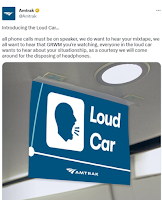
All phone calls must be on speaker, since all other passengers do want to hear the mixtape and that GRWM you're watching. Since everyone in the loud car wants to hear about other people's situationship, as a courtesy the train employees will come around for the disposing of headphones. It is not clear what will happen to those who are just quietly scrolling TikTok.

Duolingo and Peacock announced Love Language, a new reality dating show from Peacock and Duolingo where the hottest singles in the world will share a house in paradise in hopes of finding true love. The catch? None of them speak the same language. 

Game developers often celebrate April Fool's Day by releasing special in-game events, updates, or content that are meant to be humorous or absurd. 

A murder mystery visual novel game on Steam for PC and Mac is the point-and-click adventure that puts you amid the Sonic cast on a murder mystery party aboard the Mirage Express. Sonic as the victim. You, Tails, and Amy attempt to hunt down the killer among the other familiar guests. 

Niantic celebrated "April Fowl’s day" with an announced epidemic of Pidgeys. Pokémon Center replaced Pokemons with Lechonks.

Mojang Studios, the developer of Minecraft, is debuting the Vote update, which gives all the power to the hands of the players. That is, players can vote for whatever features they want in the game, and it will come to life instantly.

While many of the products and designs introduced on this day may be jokes, they can still inspire us with their ingenuity and whimsy. So, keeping an eye on April Fool's jokes and pranks can be a fun way to stay up to date with the latest trends in tech, while also potentially discovering new ideas and concepts that could shape the future of innovation.


Check past year's jokes from our previous blog posts.

April 1, 2022: April Fools' 2022 April Fools' Technology jokes can be prophetic or ominous, wishful thinking or a reflection of real concerns.

April 1, 2021: Laughter as Medicine: The pandemics is not over, but should we pause the jokes?

April 1, 2019: Technologies we wish existed. Science fiction stories and April fool jokes often describe speculative technology we wish existed in our world.

April 1, 2018: Technology Funnies and Futures. Some April Fool's jokes come true, some have the potential to be prophetic or ominous, and some products we really wish existed. 

April 1, 2016: Technology, Dreams and Jokes  As Sigmund Freud suggested, jokes often expose unconscious desires. Perhaps the technologies listed below, too, have a grain of our desires wrapped in a smile?  ...

April 1, 2016: 
IoT marches on: Key Fool's day Announcements  Technology keeps marching ahead. And the future gets smarter with the Internet of Things. Here are a few announcements made on April 1 2016 

Saturday, March 18, 2023

Direct-To-Consumer Dentistry

Direct-to-consumer (DTC) medical care is rapidly gaining momentum, appealing to everyone who values convenience, accessibility, and affordability when it comes to their health and wellness. 

One area of DTC care is telemedicine - the use of technology to deliver medical care remotely. 5 years ago, radiology, psychiatry, cardiology, emergency medicine, and dermatology were among the top specialties of telemedicine. In recent years, teledentistry has experienced a surge in popularity as a new form of delivering dental care. According to the American Dental Association, 42% of people don't go to the dentist frequently enough. This could lead to poor oral health, more invasive and expensive emergency treatments, and wider health implications. Teledentistry could help to improve the general oral health of the public. 

Another area of DTC healthcare is the direct sale of healthcare products to consumers without the involvement of healthcare providers. This can include the sale of over-the-counter medications, at-home testing kits, and other health-related products. While some dental products, such as toothbrushes, toothpaste, dental floss, and mouthwash, have always been easily accessible over the counter without a prescription, there have been other products that were exclusively available through licensed dental professionals and too expensive for most people to afford.

It wasn't until the mid-2010s that new DTC companies such as SmileDirectClub  and Candid started offering teeth aligners directly to consumers online. These companies use a combination of telemedicine, at-home impression kits, and 3D printing technology to create customized clear aligners that are shipped directly to the patient's home. The list of DTC orthodontics companies keeps growing - including ByteAlignerCoNewSmileSmileLove and SnapCorrect

According to analysis of data collected in 2019, while many respondents would have preferred traditional treatment from a dentist or orthodontist, they chose direct-to-consumer aligners instead due to the lower cost and greater convenience. More than half did consult with a dentist before purchasing aligners and most respondents (87.5%) were satisfied with DTC treatment, although 6.6% had to visit their dentist due to the severity of adverse effects. Most recent analysis of 1,362 surveys identified a significant inverse association between the complexity of an orthodontic case and the likelihood of choosing DTC treatment over an orthodontist. Laypeople seemed to understand how complex their case was. Participants were 3.53 times more likely to choose DTC treatment for a mild case (DI score, 0-10) compared with a complex case (DI score, > 20), although the likelihood of choosing DTC treatment for a moderate case (DI score, 11-20) was only 1.79 times higher than for a complex case. (DI score, measured by professionals, evaluates severity of malocclusion, or misalignment of teeth, based on position of teeth in the jaws, the size and shape of teeth, the relationship between the upper and lower jaws, etc). 

In recent years, more DTC companies have emerged offering dental laboratory services, where patients are instructed in how to independently take their own impressions and order products such as mouth guards, snoring appliances, teeth whitening trays and bleaching products, partial dentures, veneers, fake teeth and even temporary implants. Dentek store, for example, provides temporary filling kits (other options are zinc-oxide-based Safe-and-Sound kit, and Refilit material). DIYDenture offers supplies for those who need a quick solution for missing teeth. Temptooth and Brige sell tooth replacement kits on Amazon. Resetsmile offers an at-home tooth replacement option. New-York-based Dental Lab Direct is an online provider of custom-made dental products, including partial dentures, nightguards, retainers, and more. DentKits is a less known online provider of custom-made full dentures, partial dentures, and other dental appliances. TruSmile veneers offer Snap-On teeth veneers as a cheaper alternative to dentures. 

The American Dental Association (ADA) and the American Association of Orthodontists (AAO) have raised concerns about this trend, referring to it as DIY dentistry. They are concerned that patients may be self-delivering unsupervised dental treatments, which can potentially cause damage and irreversible complications. However virtual dental care is much more than a cheap digital knockoff of in-person care. Besides, in-person care is not free of flaws, including a significant disparity among licensed dentists when it comes to evaluating radiographs, performing procedures, and making decisions that may be driven by profits rather than the patient's well-being. The human sensitivity can vary from 19% to 94%, and there is only a moderate level of agreement among clinicians, with less than 63% of the data considered reliable.

New computer-guided technologies allow the dentist to utilize AI and bioengineering to improve their interventions. 3D printing offers a faster, cheaper way to create dental products. New biotechnologies will allow to engineer tooth enamel that is harder and more durable than the real thing, including its elasticity and ability to absorb vibrations. Virtual/augmented reality headsets being developed could provide instructions or media for better patient-dentist interactions.  These technologies can provide patients with more information about their dental health, guide their less-complicated DIY solutions, help them make more informed decisions about their treatment options and manage their wellbeing throughout the course of care.


Acknowledgements: Special thanks to the Stork app, OpenAI's Assistant, Perplexity (and other products based on the OpenAI API) for their help with illustrating this article and diligent research.


REFERENCES

Tabbaa S, Nguyen T, Toubouti Y, Saltaji H. Direct-to-consumer orthodontics: Exploring laypeople's perception of orthodontic treatment complexity. J Am Dent Assoc. 2023 Feb;154(2):130-140.e2. doi: 10.1016/j.adaj.2022.10.017. Epub 2022 Dec 31. Erratum in: J Am Dent Assoc. 2023 Feb 3;: PMID: 36593134.

Wexler A, Nagappan A, Beswerchij A, Choi R. Direct-to-consumer orthodontics: surveying the user experience. J Am Dent Assoc. 2020 Aug;151(8):625-636.e4. doi: 10.1016/j.adaj.2020.02.025. PMID: 32718492; PMCID: PMC7391059.

Bader JD, Shugars DA, Bonito AJ. Systematic reviews of selected dental caries diagnostic and management methods. J Dent Educ. 2001 Oct;65(10):960-8. PMID: 11699997.

Valachovic RW, Douglass CW, Berkey CS, McNeil BJ, Chauncey HH. Examiner reliability in dental radiography. Journal of Dental Research. 1986 Mar;65(3):432-6.

Alqutaibi, A.Y.; Aboalrejal, A.N. Artificial intelligence (AI) as an aid in restorative dentistry is promising, but still a work in progress. J Evid Based Dent Pract. 2023 Mar;23(1):101837. doi: 10.1016/j.jebdp.2023.101837. Epub 2023 Feb 8. PMID: 36914305.

Kane CK, Gillis K. The use of telemedicine by physicians: still the exception rather than the rule. Health Affairs. 2018 Dec 1;37(12):1923-30.

Monday, January 2, 2023

Quantified Self: From Sousveillance to Personal Science and Phenotyping

The quantified-self movement which involves using technology to track various aspects of one's daily life and behaviors, could be traced back to the sousveillance-like monitoring described in 1970. One of the first platforms for these activities - Nike+ website publicly launched in 2006 - was helping runners to track and share their workouts. 

The term "quantified self" was coined in 2007 by Wired magazine editors Gary Wolf and Kevin Kelly who co-founded the Quantified Self Institute and "Quantified Self Meetups." The movement experienced a period of rapid growth in popularity in the 2010s. Forbes has even called 2013 "The Year of the Quantified Self". 

As the technology for self-tracking has become more advanced and widespread, it has attracted the attention of commercial hardware developers. Fitbit founded in 2007 as Healthy Metrics Research, released their first tracker in 2009. In the 2010s, a number of major tech companies, including Apple, Google, and Samsung, began to develop and market wearable devices and self-tracking apps.

Quantified Self movement has not become a mainstream trend due to a combination of cost, technical barriers, and privacy concerns. Many people resented self-tracking being pushed by their employers, health and life insurers in order to monitor them. And despite many attempts to develop analysis tools, most people are still lacking the skills to process their data in order to make better decisions in everyday life.

"Personal science" (the use of scientific methods and principles to analyze personal lifelogging) and N-of-1 studies (when individual is studied in isolation, rather than as part of a larger group in a clinical study) are related to the quantified-self movement in that they both involve the use of technology and data to track and understand one's own health and behavior. These approaches, however, are not yet widely used or understood by the general public. 

The use of self-tracking data has the potential to inform the study of various medical conditions through the process of phenotyping, as several papers have demonstrated (eg, for vaccine-triggered anorexia and endometriosis). However, the understanding of how to effectively use this type of data for this purpose is still in the early stages, and it has not yet been widely adopted by traditional medical science. In contrast to what was expected 20 years ago, phenotyping has taken a back seat in human genetics research. It was thought that having a precise or well-measured phenotype was far less relevant than having a huge sample. However, now that the field of genetics has a working strategy for gene discovery, and AI is getting more sophisticated, the importance of phenotype is re-emerging, and this will likely lead to a renewed interest in the quantified self.


REFERENCES

McClusky M. The Nike experiment: how the shoe giant unleashed the power of personal metrics. Wired. 2009 Jun 22;17(07).

Gabashvili IS. Why Red Beans and Rice Are Good ... But Not with Coffee, Forbes 2012, April 30. DOI: 10.6084/m9.figshare.13600517

Osozawa S. Case report: anorexia as a new type of adverse reaction caused by the COVID-19 vaccination: a case report applying detailed personal care records. F1000Res 2022 Jan 4;11:4

Urteaga I, McKillop M, Elhadad N. Learning endometriosis phenotypes from patient-generated data. NPJ digital medicine. 2020 Jun 24;3(1):1-4.

Dick DM. The Promise and Peril of Genetics. Curr Dir Psychol Sci. 2022 Dec;31(6):480-485. doi: 10.1177/09637214221112041. Epub 2022 Sep 16. PMID: 36591341; PMCID: PMC9802013.

==

Special thanks to OpenAI's Assistant for their help with illustrating and writing this article.

blockquote { margin:1em 20px; background: #dfdfdf; padding: 8px 8px 8px 8px; font-style: italic; }