Showing posts with label Microbiome. Show all posts

Saturday, December 26, 2020

Genes and microbes

The body’s assortment of microorganisms depends on what we eat, drugs we take, the stress we are subjected to and the environment we interact with (eg, the infamous SARS-CoV-2 virus). Yet genes also have their say.

In a study of 977 twins in UK, the most heritable taxonomic group of bacteria was found to be Christensenellaceae (Goodrich et al, 2014). These bacteria is present in higher amounts in genetically-lean individuals. It encourages growth of other microbes connected to body weight and energy conservation such as methanogenic Archaea.

A study of over 1500 healthy individuals in Canada (Turpin et al, 2016), associated another abundant bacteria Faecalibacterium with immune system gene CNTN6 (rs1394174), and linked several other genes and bacteria of minor clinical importance (rs59846192 of DMRTB1 - Lachnospira, rs28473221 of SALL3 - Eubacterium, ), rs62171178 nearest UBR3 - Rikenellaceae).

A new paper posted this month on BioRxiv, reports results of a larger genome-wide association study performed for 7,738 individuals from the northern Netherlands.

The authors investigated 5.5 million common genetic variants using linear mixed models on hundreds of bacterial groups and pathways. Potential confounders such as medication usage, anthropometric data and stool characteristics were carefully considered along with dietary information. 

The strongest associations were identified in intronic regions of genes. In particular, between rs182549 in intronic region of the MCM6 gene and Bifidobacteria. This SNP was found to be responsible for lactose intolerance in European population. And so was Bifidobacteria - the most researched and most effective probiotic against lactose intolerance.

Another interesting microbe Collinsella and its family Coriobacteriaceae, associated with rheumatoid arthritis, cholesterol metabolism and leaky gut, was linked to several SNPs regulating genes responsible for the blood group antigens. Blood types does matter. 

Genetic factors might influence our preferences of vegetables, fruit, starchy foods, meat, fish, dairy and snacks. The Dutch study confirmed an earlier finding that rs642387, a genetic variation near genes influencing brain function, is linked to microbial family Rikenellaceae. The paper found that these bacteria, when present in large numbers in the gut, led to decreased consumption of salt. They also showed that an increase in the bacterial pathway of histidine degradation led to increased intake of processed meat.

The paper provides a wealth of information and comes with a lot of supplementary material.


REEFERENES

Goodrich JK, Waters JL, Poole AC, Sutter JL, Koren O, Blekhman R, Beaumont M, Van Treuren W, Knight R, Bell JT, Spector TD. Human genetics shape the gut microbiome. Cell. 2014 Nov 6;159(4):789-99. 

Turpin W, Espin-Garcia O, Xu W, Silverberg MS, Kevans D, Smith MI, Guttman DS, Griffiths A, Panaccione R, Otley A, Xu L. Association of host genome with intestinal microbial composition in a large healthy cohort. Nature genetics. 2016 Nov;48(11):1413.

Lopera-Maya EA, Kurilshikov A, van der Graaf A, Hu S, Andreu-Sánchez S, Chen L, Vila AV, Gacesa R, Sinha T, Collij V, Klaassen MA. Effect of host genetics on the gut microbiome in 7,738 participants of the Dutch Microbiome Project. bioRxiv. 2020 Jan 1.

Wednesday, August 14, 2019

Friends and Stars

reproduced from Aurametrix blog

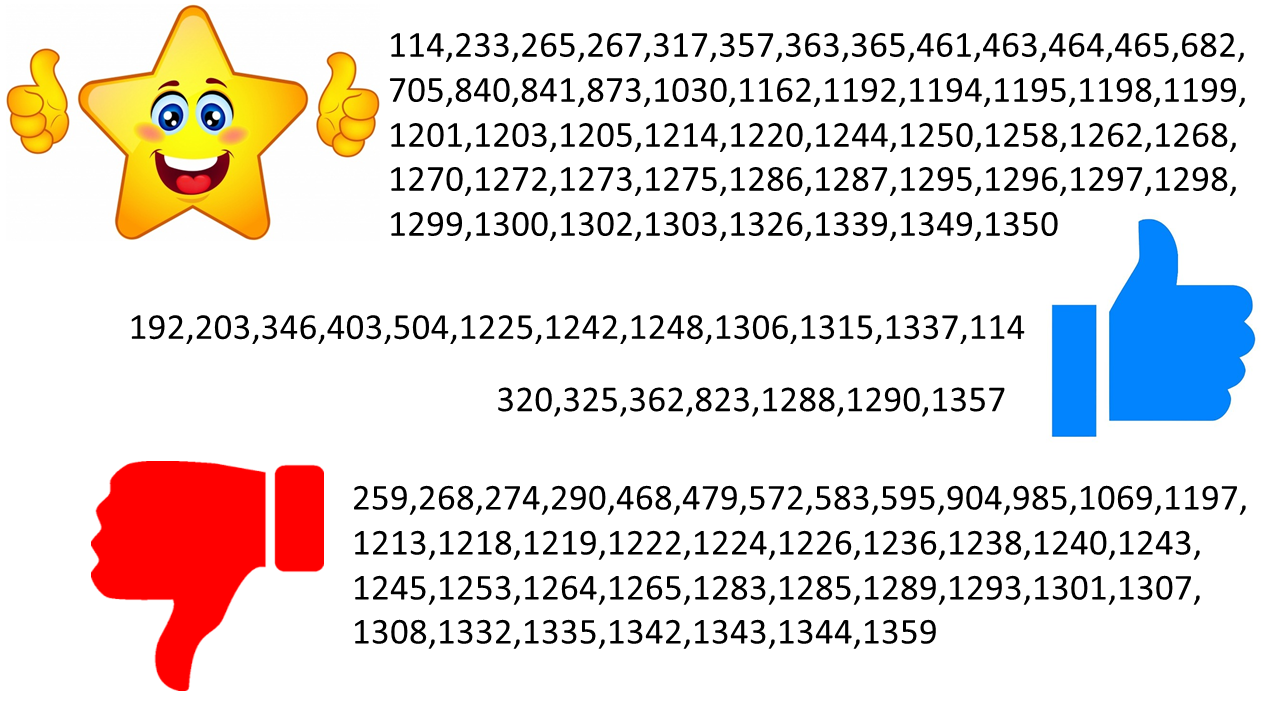
Over hundred people agreed to participate in our study. Half of them went through all the steps and let us see results of all their test kits (last digits of their IDs are listed next to the image of a star with thumbs up). Over a dozen submitted questionnaire with one or two samples - which was also very helpful. And almost half did not do anything (listed next to the red thumbs down sign). We understand that unforeseeable things happen, and  commitments may be difficult to fulfill. Still, it is worth to look if there is anything in common among those who did not submit samples and QoL questionnaires. Were those mostly our "new friends"? 

The answer is kind of, but it's not that simple.                                                                    
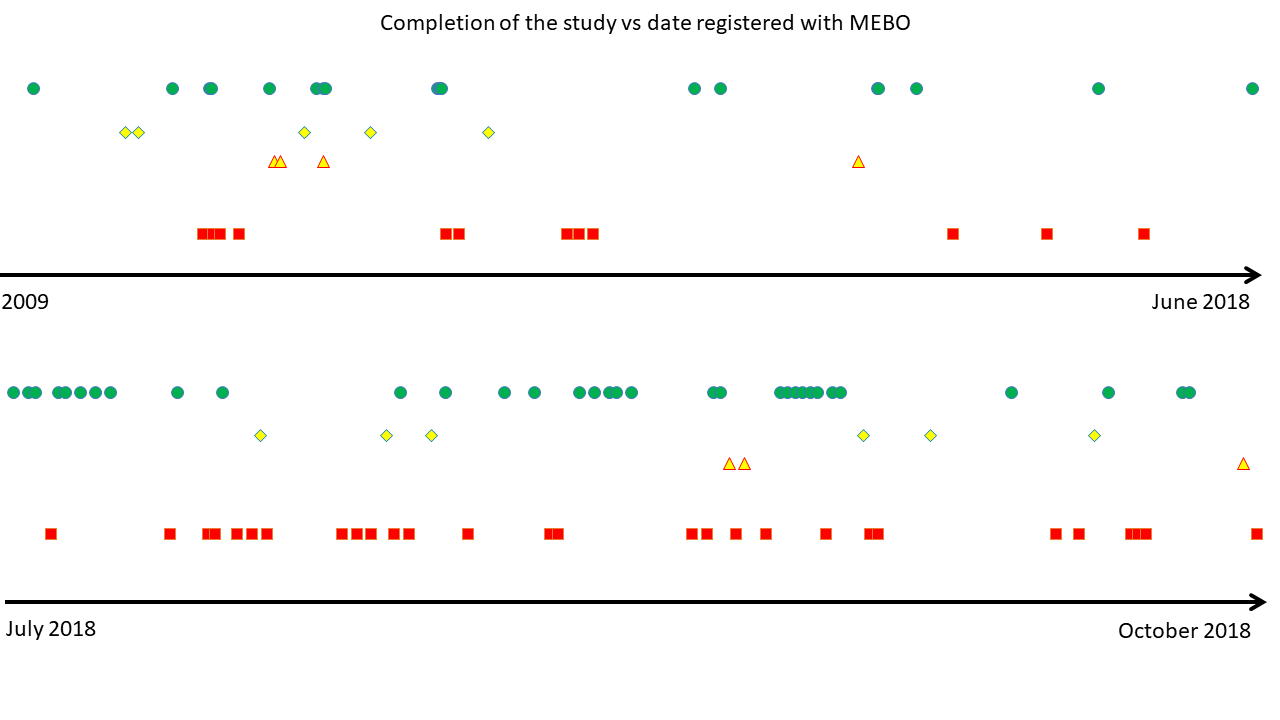
The figure shows when participants of our trial were registered with MEBO - before or after the first stages of our uBiome study. Percentage of those who did not return any samples was 30% for those who participated in prior MEBO activities vs 40% for newly signed individuals. (The ratio of our Study "Stars" vs those who did not return the kits to those who returned all kits and answered associated QoL questions was 60% for "old friends" vs 80% for "new friends"). Yet, the figure shows that "stars" (green circles) and "no-shows" (red squares) tend to "cluster", and possibly associate together.  Perhaps associations are indicators of the values we value? Show me your true friends and I'll tell you who you are?

REFERENCES

Al-Hamadi H, Chen R. Trust-based decision making for health IoT systems. IEEE Internet of Things Journal. 2017 Aug 4;4(5):1408-19.

Guo J, Chen R, Tsai JJ. A survey of trust computation models for service management in internet of things systems. Computer Communications. 2017 Jan 1;97:1-4.

Ahmed AI, Ab Hamid SH, Gani A, Khan MK. Trust and reputation for Internet of Things: Fundamentals, taxonomy, and open Research Challenges. Journal of Network and Computer Applications. 2019 Jul 26:102409.

Tang R, Lu L, Zhuang Y, Fong S. Not every friend on a social network can be trusted: an online trust indexing algorithm. In2012 IEEE/WIC/ACM International Conferences on Web Intelligence and Intelligent Agent Technology 2012 Dec 4 (Vol. 3, pp. 280-285). IEEE.

Arulselvi AC, Sendhilkumar S, Mahalakshmi GS. Provenance based Trust computation for Recommendation in Social Network. InProceedings of the International Conference on Informatics and Analytics 2016 Aug 25 (p. 114). ACM.

Sherchan W, Nepal S, Paris C. A survey of trust in social networks. ACM Computing Surveys (CSUR). 2013 Aug 1;45(4):47.


Monday, May 7, 2018

Preparing to launch our new microbiome study

We are starting pre-screening our candidates to find qualified participants, based on prior test results and ability to accurately report information.
Participants will be asked to submit their samples to uBiome on as different days in terms of their well-being/mood/symptoms as possible. They will be asked to submit their first sample if they felt they had one, two or three days in a row that were different from average. They will be asked to submit responses to our questionnaire about those days. 
We will privately follow up with suggestions to improve their wellbeing.

Our new Life-quality Test questionnaire will provide a measure for severity of Metabolic Breath and Body Odor and PATM symptoms.

Here is the first version and we welcome all suggestions and ideas the community may have.

Tuesday, October 12, 2010

You are the Chosen One, at least by your bacteria

Host genomics is not the main decision-making factor for bacteria immigrating into human body, but  it is an important factor. Two papers recently published in the Proceedings of the National Academy of Sciences help to understand why you are chosen and how the choosers make their decisions.

Benson et al studied microbes of mice C57BL/6J, HR and their offspring. BL6 is a common inbred line prone to diet-induced obesity, type 2 diabetes, and atherosclerosis. They also develop age-related hearing loss, if are not following recommended dietary allowance. High runner (HR) mice is lean and fit and loves to exercise - it's in the genes.

Noninvasive 16S RNA sequencing (Roche 454) showed that the abundance of microbes in "core measurable microbiota" depended on 530 host SNPs, mostly those located in 13 quantitative trait loci and was influenced by 5 more QTLs.

Some of the genetic regions appear to determine what kind of bacteria immigrate and strive in the host, other regions influence the immigration rate, attracting a wide variety pf or specific nationalities. Supplementary material elaborates on  sources of variation and genotype frequencies at given SNP locations. 

How are bacteria making their decisions to colonize or not to colonize?

In another PNAS article, Ben-Jacob and Schultz explain why microbes could be smarter than humans. We may think that our decisions are well thought and sophisticated, but we are, indeed, influenced by other people and our over-interpretations of other people's reactions. Bacteria can assess the noisy and stressful environment around them more objectively and rationally. They anticipate possible drastic changes in the environment and find the best decisions by providing every bacterium with the freedom to choose its own fate. This may look like throwing dice, but the colony manages the odds and effectively programs the effect of the noise on the gene circuit performance.

Our genes may be shaping microbial communities that could, in their turn, control our physical and mental health. Yet our lifestyle choices could break the patterns and let us decide what types of bacteria we want to live with.

And for those whose fight against unwanted microbes is too hard, there may be light in the end of the tunnel: Personal Genomes project has just announced a new collaboration with Rob Knight and Noah Fierer that will enable to explore the microbial diversity of various habitats of the human body and correlate it to the genotype.

References
  • Andrew K. Benson,, Scott A. Kelly,, Ryan Legge,, Fangrui Ma,, Soo Jen Low,, Jaehyoung Kim,, Min Zhang,, Phaik Lyn Oh,, Derrick Nehrenberg,, Kunjie Hu,, Stephen D. Kachman,, Etsuko N. Moriyama,, Jens Walter,, Daniel A. Peterson,, & Daniel Pomp10.1073/pnas.1007028107 (2010). Individuality in gut microbiota composition is a complex polygenic trait shaped by multiple environmental and host genetic factors Proceedings of the National Academy of Sciences of the United States of America,
  • Ben-Jacob E, &; Schultz D (2010). Bacteria determine fate by playing dice with controlled odds. Proceedings of the National Academy of Sciences of the United States of America, 107 (30), 13197-8 PMID: 20660309

Thursday, November 5, 2009

Human Body: A map of where Bacteria live

Who's The True You? A collaboration of our body and 100 trillion of microbes (bacteria, algae, yeast, protists and more) colonizing it.

Microbiota is specific to every individual, and varies systematically across body habitats and time, as well as geographical location, preventing or causing a disease after exposures to infectious agents.

Some human skin locations harbor even more diverse bacterial communities than the gut that we were thoughtfully nourishing with probiotics.

New analysis published in Science Express adds more information to the earlier results (from May 2009, for example), showing how diverse the microbiota is and how easy it is to re-colonize the skin.

We mapped some of the findings as shown in the Figure (on the right; the figure on the left maps bacteria in GI tract, from Dr. Richard Lord’s presentation at the 2008 Functional Medicine Symposium in Carlsbad, CA). Moist sites are shown with blue arrows, such as inside the nose, the armpits, the navel, dry areas are shown with green arrows, such as the forearm and oily sites are shown with yellow arrows: inside the ear, between the eyebrows, forehead, the back of the scalp.
Sites of most bacterial diversity were : The index finger, back of knee, forearm, palm and sole of foot.The forehead displayed the least diversity (with bacterial populations strongly preffering this site and not letting other bacteria to co-habit the space), but there were individual differences between different people. The mouth cavity showed the least variation in diversity both within individuals and between people. Studies of other microbes such as viruses and bacteriophages show low diversity in the airways as well, even though the human respiratory tract is constantly exposed to a wide variety of microbes and environmental agents. There is a difference between diseased and non-diseased individuals though - in Cystic Fibrosis (CF). for example, viromes are enriched in aromatic amino acid metabolism. Note that this disease causes a distinct acidic breath - the more severe the condition is in an individual, the more acidic his breath becomes. The microbes were especially sensitive to amino-acid starvation indicating that therapeutic measures may be more effective if used to change the respiratory environment, as opposed to shifting the taxonomic composition of resident microbiota.
Altered breath resulting from changed micrflora is a known phenomenon and it can be detected not only by complex mass spec machines, but also by devices used in QA testing of foods (e.g. Cyranose pick up the scent of penzane, isoprene acetone, and benzene in the breath of lung cancer patients) and car air quality sensors to study human "fermentome". (See also ongoing clinical trials on chemicals in human breath for diagnostics of diseases).

Altered bacterial populations could, indeed, be studied by metabonomic profiling. At present, however, the most accurate analysis, was performed based on microbial DNA or 16S RNA.
The study subjects were sampled four times each over a three-month period, typically after showering an hour or two earlier. Microbial DNA was then isolated directly from swabs used for sampling each body site. To recover bacteria from the skin surface, it was enough to swab it once by a wet cotton swab in 30s.
Reblog this post [with Zemanta]
blockquote { margin:1em 20px; background: #dfdfdf; padding: 8px 8px 8px 8px; font-style: italic; }