Showing posts with label Aurametrix. Show all posts

Monday, November 26, 2012

Close your eyes and tap your heels

How can you tell an extroverted engineer? When he talks to you, he looks at your shoes instead of his own. And now there is a good reason to do it - as new "No place like home" GPS shoes will be pointing to where the person is going. And displaying the progress bar - marking the beginning of the journey with one red light and indicating successful arrival to the place of destination with a green light on the top of the right toes. A red light on the other shoe will  display the correct direction to walk, illuminating on the circle of LEDs like an arrow of the compass. How will the shoes know where to go? By consulting the map uploaded via USB and its own GPS receivers, wirelessly communicating with each other. For future models, you could probably set up WiFi to let your shoes download more information, talk with other people's shoes and modify your route on the go.
So your footware might need its own network access, like agent Maxwell Smart's left shoe with a mobile subscription plan.
The "No place like home" shoes are built around two microcontrollers called Arduinos: A magnet in the right shoe and sensor in the left shoe communicate with each other and with the GPS antenna in the red tag at the back. Clicking the heels starts the GPS. So all you need to do is to close your eyes and tap your heels together. And there will be no need to follow the yellow brick road or say the magic words.

The smart shoes - designed by artist Dominic Wilcox and custom-made by Stamp Shoes might be a bit costly: £1,100 (about $1,750). A bit less sophisticated Aetrex Navistar GPS shoes developed for sufferers of Altzheimer's disease and dementia cost $299.99, and come with two monthly subscription plans - a basic 30 minute tracking plan, which reports every 30 minutes ($34.99) and for an additional $5 per month a premier 10 minute tracking plan. Nike was offering their own GPS footware too, for fitness enthusiasts, but decided that it's cheaper to use iPhone's location sensor to figure distance and serve as a pedometer.

Yet, sensors in high-tech shoes could be helpful. For example, they could detect if their owner is tired or exhausted. Fatigue Monitoring System (FAMOS, recently developed and tested in patients with multiple sclerosis (MS) and healthy individuals) continuously measures motions of feet, in addition to electrocardiogram, body-skin temperature and electromyogram. And the system can reliably distinguish the symptoms of fatigue. The shoe sensors could provide a wealth of information about motion and assess such things as the risk of falling. And this information can be combined with data collected through other channels.  Aurametrix, for example, can determine how food, air quality, the weather and various activities affect energy levels and generate suggestions on what to do - at the right time and right place. Systems like Aurametrix could eventually integrate our observations with data coming from smart objects such as shoes and heart monitors, to speed up not only walking but also the understanding of the human body, for a healthier world.


PUBLICATIONS

Yu F, Bilberg A, Stenager E, Rabotti C, Zhang B, & Mischi M (2012). A wireless body measurement system to study fatigue in multiple sclerosis. Physiological measurement, 33 (12), 2033-2048 PMID: 23151461

Marschollek, M., Rehwald, A., Wolf, K., Gietzelt, M., Nemitz, G., zu Schwabedissen, H., & Schulze, M. (2011). Sensors vs. experts - A performance comparison of sensor-based fall risk assessment vs. conventional assessment in a sample of geriatric patients BMC Medical Informatics and Decision Making, 11 (1) DOI: 10.1186/1472-6947-11-48

Friday, December 9, 2011

Can Software help Health care?


Apps, apps and more apps. Software is everything and everything runs on software.


Almost every industry in the U.S. has been disrupted by software. The health care field is not one of them.

Easily accessible consumer information makes everyone a little bit doctor. Emerging portable diagnostic devices will strengthen the transition. Are we up to it?

Not yet.

A large majority of people want to own their health information. Many want to store it online and have better control over it. Yet, most people don't want any extra work associated with updating and maintaining it. As public health record (PHR) expert Jim Tate said:
My 'dream PHR' continues to evolve. What I want now is a elegant interface which gives me a real time dynamic look into my record located somewhere in the stratosphere. I don’t want to have to do anything. Please don’t ask me to input anything or make more than 2 or 3 decisions. Make it simple, intuitive, powerful, and available on the internet and I will use it. Maybe."
Yes, we are inherently lazy, always trying to find shortcuts and reduce the amount of work to get a task done. Why spend time creating and maintaining our own records when a doctor can do it for us? Or even better, why not just live and enjoy life before we get sick?

Problem is, most of us at various stages throughout life suffer from subtle conditions like food sensitivities or allergies that doctors can't easily diagnose. They're relatively minor in severity, but if managed properly our lives would be a lot better off. So maybe all we need is a doctor who's just a mobile app away, always ready to answer our questions for free.

But will these legions of online doctors have enough insight into our everyday lives to know what we eat, what we breath, and what it is we're not saying to form an expert opinion?

Not likely. Even if we could wear mobile devices - always on, always connected, counting our steps, cataloging our night sweats, and equipped with miniature cameras to photograph what we eat - would the doctors be able to process all that information to form a useful diagnosis?

Aurametrix is an advanced analysis tool that correlates our symptoms, reactions and feelings based on what we enter into the system about our diet, exercise and conditions. Results from early usage of the tool show that even occasional sparse information - entered on days we feel better or worse than average - if properly evaluated can provide a snapshot of our health with sufficient insight to connect the dots to better health.  It's a form of collective intelligence that's already providing interesting discoveries without the need for us to know all the details. For example, it already knows what our foods consist of, how our daily activities or feelings align with past events, and that there are commonalities among many different things.

The future is already here but are we ready for the future?

REFERENCES

Archer N, Fevrier-Thomas U, Lokker C, McKibbon KA, & Straus SE (2011). Personal health records: a scoping review. Journal of the American Medical Informatics Association : JAMIA, 18 (4), 515-22 PMID: 21672914

Kim J, Bates DW. Analysis of the definition and utility of personal health records using q methodology. J Med Internet Res. 2011 Nov 29;13(4):e106.

Geissbuhler A, Kimura M, Kulikowski CA, Murray PJ, Ohno-Machado L, Park HA, Haux R.
Confluence of disciplines in health informatics: an international perspective. Methods Inf Med. 2011 Dec 6;50(6):545-55.

Macedo LG, Maher CH, Latimer J, McAuley JH. Feasibility of using Short Message Service (SMS) to collect pain outcomes in a low back pain clinical trial. Spine (Phila Pa 1976). 2011 Dec 3.

Lo Piparo E, Worth A, Manibusan M, Yang C, Schilter B, Mazzatorta P, Jacobs MN, Steinkellner H, Mohimont L. Use of computational tools in the field of food safety. Regul Toxicol Pharmacol. 2011 Aug;60(3):354-62. Epub 2011 May 12.

Benito PJ, Neiva C, González-Quijano PS, Cupeiro R, Morencos E, Peinado AB. Validation of the SenseWear armband in circuit resistance training with different loads. Eur J Appl Physiol. 2011 Dec 6.

Yoshiaki Sugawara,Chie Sugimoto, Sachiko Minabe, Yoshie Iura, Mai Okazaki, Natuki Nakagawa, Miwa Seto, Saki Maruyama, Miki Hirano and Ichiro Kitayama. Use of Human Senses as Sensors. Sensors. 2009, 9(5), 3184-3204; doi:10.3390/s90503184

Friday, December 17, 2010

Danger, Will Robinson!!! or injury prevention with sensors and algorithms


Health is determined by many factors including:
  • Behavior (Physical Activity, Eating habits, Tobacco or substance abuse, responsible sexual choices, etc)
  • Mental Health 
  • Injury and Violence 
  • Environmental Quality 
  • Preventative measures such as immunization 
  • Access to Health Care

All these factors are quantifiable, predictable and preventable. Injuries are most likely to be  perceived as “accidents” and “acts of fate”,  but they depend on the same determinants as other health factors: individual behavior, social and physical environment.  The likelihood of injuries -  unintentional ones and those caused by acts of violence - can be computed from physical location (estimations for USA1 are a good example), gene-environment interactions2, prior medical history, and physical traits3.

There are many ways to prevent injuries - just say "no" to risky behaviors, wear preventative gear while playing sports or fall-optimized shoes for elderly, watch out for others engaged in similar activities... Yet, sometimes we forget to watch, don't have access to histories of others or get diverted.  Would a body sensor or a gadget with smart software be able to warn us about potential accidents ahead to help prevent accidents?  What would it need to measure?

Software and devices automatically detecting and reporting accidents already exist:

Halo Monitoring's fall detection system, for example,  consists of a chest strap and belt clip with motionOnStar or mbrace that "intelligently integrate the driver, the vehicle and the environment" - capabilities such as this will be provided in the area of next-generation health management systems like Aurametrix.
sensors, heart rate and skin temperature monitors. Although the system detects falls only after they happen, a study showed that just the fact of wearing it increases alertness of seniors and reduces the number of falls. Although fall detection systems are not as advanced as telematics for cars - like
Unprecedented accumulation of data  - such as snapshots of driving behavior or 1.2 million person-years of hip fracture observations (Kanis JA) allows development of smarter software able to predict injuries.  Logistic regression models (Kononen et al., 2011) predict seriousness of auto accidents,  first-principles mathematical models (such as AHAAH for the ear) connect forces with injuries, neural net and other data mining approaches foretell which juvenile offenders are likely to return to crime (source of  "intentional injuries"), or allow to calculate risk of fractures based on milk intake, personal history of accidents and body mass index. Self-quantifiers such as René Ghosh are able to figure out how to use their own data to predict future injuries. Using simple math (Riegel equation bringing all running logs on to a comparable level) and trend analysis, he tied his accidents to wanes following waxes in running performance. Researchers keep refining the variables predicting injuries.  Swanenburg et al., for example, predicted multiple falls for those with a history of multiple falls (odds ratio, 5.6) and use of multiple medications (odds ratio, 2.3). And there is another simple measurement of standing position helpful in prediction. Frequent fallers, indeed, have a narrower stance width than non-fallers.


In the always-connected smart-sensor-equipped future, things such as Intel's magic carpet - picking up the weight, angle and pressure of steps - will be a commodity. Gene tests predicting injuries will be integrated with data coming from our carpets, clothing, footwear and location information. And this may be sooner than you think.


References

1. Centers for Disease Control and Prevention (CDC), National Center for Injury Prevention and Control. Web-based Injury Statistics Query and Reporting System (WISQARS); 2010 Mar 4 Available from: http://www.cdc.gov/injury/wisqars/index.html

2. Husted JA, Ahmed R, Chow EW, Brzustowicz LM, Bassett AS. Childhood trauma and genetic factors in familial schizophrenia associated with the NOS1AP gene. Schizophr Res. 2010 Aug;121(1-3):187-92. PMID: 20541371

3. Swanenburg J, de Bruin ED, Uebelhart D, & Mulder T (2010). Falls prediction in elderly people: a 1-year prospective study. Gait & posture, 31 (3), 317-21 PMID: 20047833

4. Kononen DW, Flannagan CA, Wang SC. Identification and validation of a logistic regression model for predicting serious injuries associated with motor vehicle crashes. Accid Anal Prev. 2011 Jan;43(1):112-22. PMID: 2109430

5. Price GR. Predicting mechanical damage to the organ of Corti. Hear Res. 2007 Apr;226(1-2):5-13. Epub 2006 Sep 15.PMID: 16978813


Sunday, March 28, 2010

Health Data, Self-serve, Visualization, Semantic Analysis and Collective Intelligence

Notes from the Biomedical Data Mining Camp Session led by Dr. Irene Gabashvili and other health-related discussions at Data Mining Camp and Transparency Camp 2010.

The title for the session was "Biomedical Data Mining: Successes, Failures, and Challenges" (streamed online from Fireside C).
The topic stemmed from the similarly named last year's session - Biomedical Data Mining: Dimensionality, Noise, Applications - now split into several discussions including Bioinformatics & Genome Sequencing organized by Raymond McCauley, Dimensionality Reduction moderated by Luca Rigazio (HLDA / HDA; LDPP; Core Vector Machines; Sparse Proj SQ; Random Projection and Feature Selection).

Main sub-topics of the biomedical session were:
  • Reality Mining
  • Visualization
  • Imaging
  • Signal Processing
Reality mining is expected to improve public health and medicine. It was named as one of "10 emerging technologies that could change the world". This is not only about mining data pertaining to social behavior - although social factors do impact well-being and social data provides valuable health predictors. It's also about health data collected in real and near real time. Audience asked about ways to collect health data and their limitations. Some of the questions reflected earlier Q&A with the Data Mining Camp expert panel , especially Dr. Michael Walker, author of numerous FDA and CLIA-approved products to diagnose and treat disease. He commented on the need to have tools well beyond the data available to take cell samples every two minutes instead of laboratory testing every few months - in order to allow cellular simulations and obtain parameters for differential equations. Sampling frequencies don't come close to allow this kind of modeling. Irene Gabashvili agreed that first-principles cellular modeling for predicting health won't be possible (although there are engineers that believe a platform for real-time in-vivo measurements of most cells can be developed). Yet, good predictors could be and will be developed - based on sensors measuring macro-level observations and missing value estimators. Genetic information is not enough, we need to capture environmental risk factors. How can we separate genes and environment?, asked one of the participants. Aurametrix' initial focus is on chemicals in our food - and even though some may argue that our taste and satiety mechanisms are dictated by genes, food analytics provides insights into non-genetic components of our health. Other questions were on the time line for body sensor networks and data growth. Jeffrey Nick of EMC estimates that personal sensor data will balloon from 10% of all stored information to 90% within the next decade. Irene Gabashvili thinks that this will happen rather sooner than later, perhaps in the next two years.

Another interesting aspect of reality mining is crowdsourcing or collective intelligence - in order to get useful information from all the data (temporospatial location, GPS, activity, food, symptoms, behavior, communication content, proximity sensing), we need to analyze it not only on individual but also group level. We need to share more, without sacrificing privacy and security. Collective contributions can be reliable - Shamod Lacoui's answer to this is in selecting those who contribute, restricting inputs to domain. It would help to “filter out the dross”, while “saving the best”. It is needed to suppress noise, to infer intelligence from the collection of facts, clicks, steps, whatever one can contribute. This resonates with discussions at the Transparency Camp - one of the useful tools is SwiftRiver - free, open source software platform to validate and filter news. Swift relies on Natural Language Processing, Machine Learning and Veracity Algorithms to track and verify the accuracy of reports and suppress noise (like duplicate content, irrelevant cross-chatter and inaccuracies). Transparency Camp also posed a question on whether there is a need for an FDA-like institution to ensure information safety and healthy information consumption.

Self-serve was a topic of a smaller Data Mining Camp Session. Even though it was aimed at sales reps that need to go beyond Excel spreadsheets to mine private data of their interest, self-service is currently the only option for health care consumers. People need to analyze everyday life for health implications. They need better tools to not focus on metrics that are easy to collect instead of metrics we need to collect.

In order to mine high-dimensional health space, many disparate types of data should be mashed and validated, gaps should be bridged and structured metadata added to data. Randy Kerber talked about data formats and approaches to make it happen. Semantic web discussions involved NoSQL experts that mentioned limitations of gaining popularity technologies such as MongoDB, Cassandra and HBase. Another relevant session - on cloud computing - discussed its (sometimes over-rated ?) performance and Hadoop technologies.

Visualization techniques provide one of the most effective methods of extracting knowledge from health data. Remember who invented the pie chart? That's right, it was Florence Nightingale, a nurse who needed a way to better represent her data. one of the most famous examples of visualizing epidemiological data was Dr. John Snow's map of deaths from a cholera outbreak in London, Many other techniques and software tools exist, but maps remain popular - especially google maps API. One of popular tools for epidemiological data is Google Maps API. For example, it embeds Google Maps into healthmap.org with JavaScript.

One of the participants of Biomedical Session developed kidsdata.org (@kidsdata on twitter). It provides insights into geospatial autism statistics and visualizes trends and other useful health-related information.

Another way to display geospatial data is Dynamic Choropleth Maps. Complex networks can be also explored with alluvial diagrams and other approaches. More visualization techniques and tools can be applied to health data - to look at the data in new ways and gain useful insights.

Some of the questions from the audience were on the availability of data. Sources discussed included CDC (see, for example, NHANES laboratory files; eHealth metrics) and Entrez Life Sciences databases.

Signal Detection and Signal Processing for Mining Information was another discussion topic.
Questions were on data mining versus simple tracking and signal monitoring. It was agreed that data mining is the key to health management. Cardionet, body sensors (see posts on teletracking, M-health, Telemedicine: part 1; Telemedicine: part 2; Health 2.0 Software tools, Devices to keep you healthy), SNP detection, telemedicine applications, random and rare electrocardiographic events and other applications were also discussed.


See other materials from Data mining Camp 2010:


Reblog this post [with Zemanta]

Saturday, March 6, 2010

Test your genes and loose the weight?

Do Your Genes Determine Which Diet Means Weight-Loss or General Health Success?
Can nutrition be optimized with respect to your genome?

Commercial genetic tests promising to provide personalized diet recommendations (there were 6 in 2005, not counting companies developing DNA nutri-chips to pinpoint an animal’s nutrition needs) are constantly offered and withdrawn. Interest in genetic testing over the past few years was going down (click on the right figure to see google trends), but continuously published findings cause bursts of interest (click on the right figure to see XRanks by Bing) .
Clearly, genetic variations determine how we absorb, filter, metabolize, store and eliminate nutrients and how these nutrients affect processes in our body. But should we get more vitamin B if our MTR gene carries predisposition to heart disease or have extra calcium and vitamin D if our VDR gene indicates possibly weak bones?
The use of this information may be premature, the gene-vitamin linkages may not be credible, and far inferior to your family health portrait with much higher cost-to-benefit ratio than self-evaluation and self-awareness through personal health management tools.

It Isn't Just What You Eat That Can Kill You, and It Isn't Just Your DNA That Can Save You--It's How They Interact, said a 2005 newsweek article. It is also about other environmental factors, your history of interactions, and microbes you cultivated in your system that determine what food is best for you.

Lactose intolerance, for example, may be derived from genetic tests showing how effective our bodies are in producing the lactase enzyme (the LCT gene). We can determine it in a much cheaper and reliable way, however, by drinking milk and looking at the symptoms. Same about FMO3 variations and trimethylaminuria. A study of lung cancer rates in China found that people at lowest risk were genetically deficient in an enzyme that metabolizes isothiocyanates in cruciferous vegetables, but crucifers don't seem to harm those with a functional enzyme either... except those who gets get intestinal gas from eating them. But this may not be because of the genes, but due to the lack of beneficial gut bacteria.

The weight-loss industry long admitted that one specific diet isn't likely to work for everyone. How do diet programs work? Forget about the ratios of carbs, fiber and protein, the most important factor is to burn off more calories than you're taking in. Behavioral factors rather than macronutrient metabolism are the main influences on weight loss, so it's more about mindful eating versus mindless eating. And here genes come into play again. Satiety mechanisms are complex and involve multiple sensors, operating differently according to underlying genetics. that's why a carb-heavy breakfast can leave you hungry in two hours but keep your neighbor full until noon, while high-protein diet makes you fill fuller.

This week (at the American Heart Association’s Joint 50th Cardiovascular Disease Epidemiology and Prevention – and – Nutrition, Physical Activity and Metabolism conference, being held March 2-5 in San Francisco, CA) Stanford University researchers reported that a genetic test can help people choose which diet works best for them. The study involved 133 overweight women, who lost more weight on a diet that matched their genes - either low-carbohydrate or low-fat. Improvements in clinical measures related to weight loss (e.g., blood triglyceride levels) paralleled the weight loss differences.

The findings are also partially based on an earlier paper, called the A to Z weight-loss study published in the Journal of the American Medical Association in 2007 and a small (100-person) unpublished study by Interleukin Genetics.

More than 6,000 genes may be affecting our weight, including multiple genes determining our taste preferences (e.g., to bitter foods, calcium, garlic or coffee) and behavioral predispositions. Genetic testing along with protein- and metabolomic-based diagnostics would provide invaluable data for understanding ourselves. Data-mining tools for health-related factors will allow integrated and holistic analysis and help to personalize diets, fitness and medical treatments.


Reblog this post [with Zemanta]

Wednesday, January 13, 2010

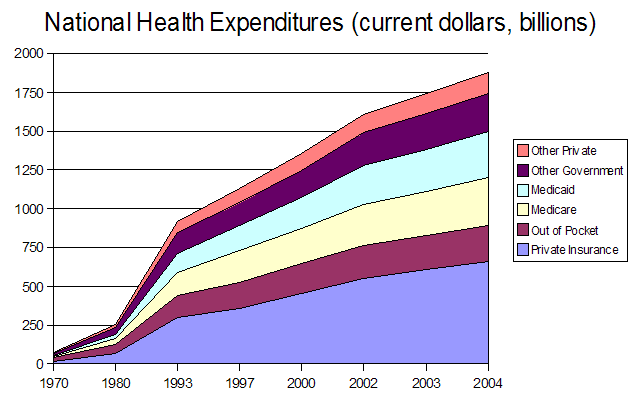
Counting Health Care Costs

Is control of health care costs possible?

A piechart from this article shows that constantly rising health care costs are mostly due to hospital care (31%). Physician services are the next largest item, comprising one-fifth of the national health spending. Prescription drugs, while accounting for only 10% of total expenditures, have been the fastest-growing segment along with new medical technologies that are often not cost-effective, and provide incremental improvement or just an illusion for consumers that they are better taken care of. Second major contributor to the increase in spending is chronic disease. It actually accounts for 75% of national health expenditures. One of the main reasons for increased disease prevalence is an increase in unhealthy lifestyles. Obesity-related illnesses accounted for 27 percent of the real health care expenditure increase between 1987 and 2001, of which increased obesity prevalence accounted for 12 percent. Non-obesity food-related illnesses are at fault too. Aging of the population also contributes (although rather minimally) to the high growth rate of health care spending. Administrative costs comprise 7% of health care expenditures (~2% Medicare program).

So the primary cost is unnecessary complexity. We need to change the culture of medicine, it's business model to improve the efficiency in delivering care and reduce the cost resulting from the wrong model.

An excellent blog in New York Times yet again explains the reasons on why health care costs so much. Great comments from the readers provide even more insight.

Here are a few excerpts we can't agree more:

"Health care is expensive because of the pervasive entitlement attitude" Joseph R. Antos, the William H. Taylor scholar in heath care and retirement policy at American Enterprise Institute.

"Insurers, pharmaceutical companies, device manufacturers, doctors and hospitals are all able to drive up prices with limited pushback" Jacob S. Hacker, the Stanley B. Resor professor of political science at Yale University.

"People often do not have control over medical expenses, the way they can control expenses when buying a car"
"Another reason normal market forces fail in the health care system is a lack of clear information. Purchasing health care is not like buying a car.", "the price tag is rarely even discussed", "people often do not have control over medical expenses",
David M. Herzenhorn

"The costs of medical care are a hodgepodge of different prices for different patients", "There is no rational process for selecting a cost-effective treatment", M Mackiernan

"How do I "negotiate" my fees when they are pre-set by my insurance company?", "I keep reading that doctors recommend unnecessary tests but how am I to know what's necessary? I'm not a doctor. I just want to feel better and that's why I go to the expert", E. Nowak

"Doctors and patients rarely know the costs and administrators do not want them to know.",
"Health insurance is not really insurance at all. It is more like a membership fee to a YMCA.", Marci Twain

"The most powerful way we can reduce medical costs is for people to stop getting medical care when non-medical health care will suffice.", Anonymous Commenter

"One element of the increasing cost is the vast overtesting that is performed in teaching hospitals.", "A large fraction of blood tests, procedures, and imaging are simply a waste, but there is no effort to put any brakes on the system.", David Freeman

"Please do not ever think a doctor writes a prescription because it is his best choice, it usually is written because he likes the pharmaceutical rep and she or he has treated the like a king.",
Mark Shryock

"New and fancy machines which offer marginal improvement in actual care but cost more.", PH

"What a mess. It makes me sick--a luxury I apparently cannot afford.", Elliot

"In essence the solution to cost control is in great part in the realm of industrial engineering. Lets get the industrial engineers on board and perhaps in charge.", Rafael Venegas

"The vast majority of xrays scans and tests performed are done to avoid malpractice. .. Americans are radiated so doctors can avoid the awful pressure of lawsuits and you pay for it..", Boly

"In some areas, like implantable medical devices, an increasing number of manufacturers contractually require hospitals to keep prices that hospitals pay secret from the surgeons who tell hospitals which products to buy.", Jeffrey Lerner

"The reason health care in the U.S. is so expensive is because all the players (doctors, lawyers, insurance companies, drug companies, medical equipment companies, patients, et al.) are abusing the system.", G. Stern

"I can't believe a five minute altrasound cost over 1,000 dollars", Linda

"Capitalist theory says that price is set at that point at which providers (suppliers) receive enough money to be induced to make the products and consumers (demanders) are willing to pay for that product. The problem is that the demand for health care is “relatively inelastic.”.. there is no limit on the will of the consumer to pay.", AF

Let me disagree with the last commenter, though. "Thank God", says AF, "I do not have to know the science behind to know the relative effectiveness rates of each type of treatment". A century ago nobody would imagine been able to make a phone call or operate a computer. May be people like to live too much. But better tools will be created to allow them make informed decisions to better their health and their lives at reasonable costs.


Aurametrix is developing decision support systems to help you evaluate personal health risks, decide on preventative measures, estimate cost/benefits of performing diagnostic tests. Better solutions for a healthier world.
Reblog this post [with Zemanta]

Sunday, January 3, 2010

On M-Health, Wireless Health and Smart Plasters

M-health or mobile health is a recent term for mobile devices supporting medical practice. This term is closely related to Telemedicine (coined in the 1970s) and to another recently introduced term wireless health.
Mobile phone subscribers per 100 inhabitants 1...
Aurametrix wrote about exciting health gadgets and devices in several last year's blogs (such as Telemedicine: part 1, Telemedicine: part 2, Devices to keep you healthy, Going for the piece of a healthcare pie)

Many companies - large and small -make use of wireless sensors to collect clinically-actionable data for point-of-care. Companies including GE, Cinterion, Cardionet, Heatlhsmart, Digi, RIM, Proteus, E-Device, MedApps, are now working in mobile health area offering products and developing prototypes. Check, for example T+ Medical, Turkcell's Saglik365, Orange's Diabeo, Telstra's My-Glucose, Cardionet's MCOT™, and numerous cell phone applications (as some people say, the Phone will become your doctor) such as Allscripts remote. And there will be many more exciting developments - portable wearable devices scanning brain for signs of depression & stress disorders,

Everyday choices determine your health better than genomics. In addition to exciting gizmos and wearable monitors measuring activity, heart rate, sleep patterns, some companies are working on tiny implantable sensors helping to monitor health and health-related behaviors.
Proteus Biomedical is implanting tiny sensors into pills that send signals translatable into messages - such as "just took lipitor at 6:20pm" - sent in a very safe and private way to a wearable plaster, or a smart-band aide. This smart plaster is also picking up information on health-related measurements such as your heart rate, breathing patterns, activity level, stress, respiration
get sends you reminders. Last September Novartis worked with Proteus on a small 20 patient study to track patients’ compliance with their blood pressure drug regimen. This year the companies will work on sensor technology in organ transplantation.


American tech companies, taking notice of the unmistakable demographic trends, have launched a surge in gudgets for aging population - dubbed the silvertech. Emergency alert services have become a proliferating category in silvertech, along with sensor systems for the home, various kinds of long-distance health monitoring and smart medication dispensers that provide reminders and control dosage. Some dispensers signal a caregiver when a dose isn’t taken or a pharmacy when it’s time for a refill.

GE scientists are developing wearable RFID sensors to detect airborne chemical agents - to alert people to the presence of environmental chemical agents in the air. A novel technology based on resonant antenna structures of RFID sensors coated with various sensing films will recognize specific volatile organic compounds (VOCs) and chemical agents with part-per-billion detection limits. The sensor could also be used to analyze a person’s breath. Simply breathing on the sensor could potentially pick up biomarkers that serve as an early signal to the presence of certain diseases such as diabetes or cancer and metabolic disorders.


Reblog this post [with Zemanta]

Friday, January 1, 2010

Environmental Mapping: from personal choices to global impact

Eyes on EarthImage by manybits via Flickr

In the not-so-far-away-future, we will be surrounded by “smart dust” — tiny digital sensors, strewn around the globe, gathering all sorts of information and communicating with powerful computer networks to monitor, measure and understand the physical world in new ways.

These tiny sensors could be embedded in identification badges or cloth, perhaps using resonant antenna structures of RFID sensors or other systems coated with various sensing films that will recognize specific volatile organic compounds (VOCs), biological and chemical agents with part-per-billion detection limits.
Wearable RFID sensors could detect not only airborne chemical agents alerting to the presence of environmental chemical agents, but also breath biomarkers serving as early signals to the presence of certain diseases such as diabetes or cancer and metabolic disorders.

Wondering where it's safe to swim in Europe? An initiative called Eye on Earth - Water Watch created by Microsoft and the European Environment Agency and powered by Bing will help you find out what water you can swim in without wondering if you're going to go home with more than just memories.


Want to keep an Eye on Earth?
From plankton blooming off the coast of Ireland, diminishing and increasing populations of plants and animals, satellite images of the planet could give a more vivid understanding of the world that surrounds us. Launched during the recent United Nations Climate Change Conference, the interactive online Environmental Atlas of Europe initially focuses on visuals and stories from European countries.

Microsoft and EEA have previously collaborated on the Eye on Earth platform, which combines scientific information with on-the-ground local observations contributed by millions of users on topics such as water quality at more than 22,000 swimming sites in Europe. The AirWatch application provides real-time data on specific air pollutants from air-quality monitoring stations, as well as user-submitted descriptions of air quality in different areas. Much of the information is available through text messages as well as online. Future plans for Eye on Earth include tracking ground-level ozone, oil spills, biodiversity, and coastal erosion to create what the partnership calls "a global observatory for environmental change." Other available online tools include Danish MapMyClimate that allows people to understand the impact of their consumer habits on the environment; Project2Degrees, emissions-tracking software developed in partnership with the Clinton Foundation that allows city authorities to measure and reduce their emissions; Fiat eco:Drive, a dashboard tool that helps drivers improve their fuel efficiency; and Bend the Trend, a website where users around the world can pledge to make lifestyle changes that will have a positive impact on emissions reduction.

In addition to smart sensors, smart phones can provide more powerful capabilities combining human intelligence and the ability of phones to automatically record pictures and sounds, tagged with keywords, where and when information automatically uploaded to web sites

PEIR, the Personal Environmental Impact Report, is one of many online tools that allows to explore and share how you impact the environment and how the environment impacts you.
This project involves collecting travel, time and location data from mobile phones feed into Web databases to calculate an individual’s personal environmental impact and exposure to pollutants. Another tool - whatsinvasive.com, in cooperation with the National Park Service, uses a smartphone application to identify, photograph and track the advance of invasive plants, like Harding grass and poison hemlock, which can crowd out local species and undermine biodiversity.

Deborah Estrin, a computer scientist at the University of California, Los Angeles and her colleagues at the university’s Center for Embedded Networked Sensing have designed several projects that use cellphones and people in data-gathering and analysis. Cellphones, they say, are versatile data collectors and are becoming more powerful all the time — with cameras, GPS, accelerometers and Internet connectivity. Their work is at the forefront of an emerging field called participatory sensing.


Reblog this post [with Zemanta]

Thursday, December 31, 2009

Welcome 2010!


According to Bill Vaughan, an optimist stays up until midnight to see the new year in. A pessimist stays up to make sure the old year leaves.

Goodbuy 2009 was more frequently twitted as 2010 was sweeping across the globe, but there were no more pessimists left shortly after 2010 arrived on the islands of Western Hemisphere.
2009 was a year to remember but not repeat . Everyone hopes for a better year, so "Happy New Year"will continue to be a trending topic for a while - even if not among the top 10.

Wellcome 2010!

Saturday, December 12, 2009

Vinegar and Water Diet

A glass bottle of commercially produced raisin...Image via Wikipedia

Vinegar and Water Diet was made popular in 1820 by Lord Byron - so says the Fad Diet Timeline (Fad Diets Throughout the Years) article by the American Dietetic Association.

Some people found this diet can do miracles, while others had side effects without any positive results and called it a scam.

The primary reason that this diet works could be that you are told to eat moderate portions, watch the nutritional composition of the food you eat, and get exercise. Just doing those alone is often enough to stimulate your body to maintain a healthy weight, if not lose weight.

Yet, there could be properties in the vinegar that will help you lose weight.

One of the premises of the Apple Cider Vinegar Diet is that taking small amounts of apple cider vinegar daily suppresses appetite and assists in weight loss. Apple Cider Vinegar is also said to reduce glucose levels, treat acid reflux disease and cure acne, among other things. There also were ungrounded claims of cider vinegar to be a special source of various B vitamins and amino acids.


There have been clinical studies, on both rats and humans, suggest apple cider vinegar does make one feel fuller. Many people agree about apple cider vinegar’s ability to suppress appetite (at least because of the taste), but more research is needed. Various other claims of benefits are not supported by research but there is some support for apple cider vinegar’s role in lowering glucose and cholesterol levels and increasing HDL (good) cholesterolin people. Apple cider vinegar was shown to reduce serum triglyceride (TG) levels and increased HDL-cholesterol in diabetic animals.

Another interesting fact is that vinegar was shown to reduce counts of not-so-benefitial bacteria. Diluted solutions of various household sanitizers (apple cider vinegar, white vinegar, bleach, and a reconstituted lemon juice product) were tested for their effectiveness in reducing counts of inoculated Escherichia coli and naturally present aerobic, mesophilic bacteria on lettuce. (J Food Prot 2002,Oct,01;65(10):1646-50; (PMID: 12380754)) Of the sanitizers tested, 35% white vinegar (1.9% acetic acid) was the most effective in reducing E. coli levels (with a 5-log10 reduction after 5 min with agitation and after 10 min without agitation) and in reducing aerobic plate counts (with a >2-log10 reduction after 10 min with agitation).

Could apple cider vinegar be replaced with anything else to achieve the same effects?

Most dieters would answer no to this question. They would tell you to "be careful with which vinegar you use. White vinegar is good for many many thing, but don't drink it will remove all of the minerals and nutrients from your boby. Apple cider vinegar is the only one you want to ingest".

I may say this statement is rather too strong, but what about the actual chemical content?

Comparison of various vinegars shows that no chemical in particularly stands out - apple cider vinegar has a higher Manganese content, but that's about it.

Typical white distilled vinegar is at least 4% acidity and not more than 7%. Cider and wine vinegars are typically slightly more acidic with approximately 5-6% acidity.

Of course, there also could be a yeast and bacterial content - at least dead Acetic acid bacteria (these critters derive their energy from the oxidation of ethanol to acetic acid during respiration. They are Gram-negative, aerobic, and rod-shaped).
Commercially available vinegars, however, are well filtered (no mother of vinegar) and were reported to work in people's diets even if not organic and expensive types.


Usual apple cider vinegar substitutes are:

malt vinegar OR white vinegar (a good choice for pickles) OR wine vinegar (not for pickles)

lemon juice (as a flavoring or for acidulating water) OR lime juice (as a flavoring or for acidulating water) OR brandy (for deglazing pans) OR fortified wine (for deglazing pans and perking up sauces) OR wine (for deglazing pans and perking up sauces) OR ascorbic acid (mixed with water) OR amchoor OR tamarind paste

--------------------------------------
Since vinegar can be made from anything with sugar, there are probably too many different types to count made in countries throughout the world. Each country may use starting materials native to their area and tailored to the specific tastes of the region.

Typical retail varieties of vinegar include white distilled, cider, wine (white and red), rice, balsamic, malt and sugar cane. Other, more specialized types include banana, pineapple, raspberry, flavored and seasoned (e.g., garlic, tarragon).
Are there Formal Standards for Vinegar?
The following varieties of vinegar are classified by a U.S. Food and Drug Administration (FDA) Compliance Policy Guide for labeling purposes according to their starting material and method of manufacturing:

•Cider vinegar or Apple vinegar is made from the two-fold fermentation of the juices of apples. Vinegar can be made from other fruits such as peaches and berries with the labels describing starting materials.


•Wine vinegar or Grape vinegar is made from the two-fold fermentation of the juice of grapes.


•Malt vinegar, made by the two-fold fermentation of barley malt or other cereals where starch has been converted to maltose.


•Sugar vinegar, made by the two-fold fermentation of solutions of sugar syrup or molasses.


•Spirit or distilled vinegar, made by the acetic fermentation of dilute distilled alcohol.


•Blended Vinegar made from a mixture of Spirit vinegar and Cider vinegar is considered a combination of the products that should be labeled with the product names in the order of predominance. It is also the product made by the two-fold fermentation of a mixture of alcohol and cider stock.


•Rice or Rice Wine vinegar (although not part of FDA’s Compliance Policy Guide) has increased in popularity over the past several years and is made by the two-fold fermentation of sugars from rice or a concentrate of rice without distillation. Seasoned rice or rice wine vinegars are made from rice with the “seasoning” ingredients noted on the label.


•Balsamic vinegar (also not a part of FDA’s Compliance Policy Guide) continues to grow in market share and “traditional” and “commercial” forms are available. The products are made from the juice of grapes, and some juice is subjected to an alcoholic and subsequent acetic fermentation and some to concentration or heating. See the “Today’s Vinegar” section of the Web site for more information regarding Traditional and Commercial Balsamic Vinegar.


Aurametrix is developing decision support systems to help you manage your tests. Better tools for a healthier world.

Reblog this post [with Zemanta]

Monday, November 30, 2009

blockquote { margin:1em 20px; background: #dfdfdf; padding: 8px 8px 8px 8px; font-style: italic; }