Showing posts with label crowdsourcing. Show all posts

Wednesday, August 14, 2019

Friends and Stars

reproduced from Aurametrix blog
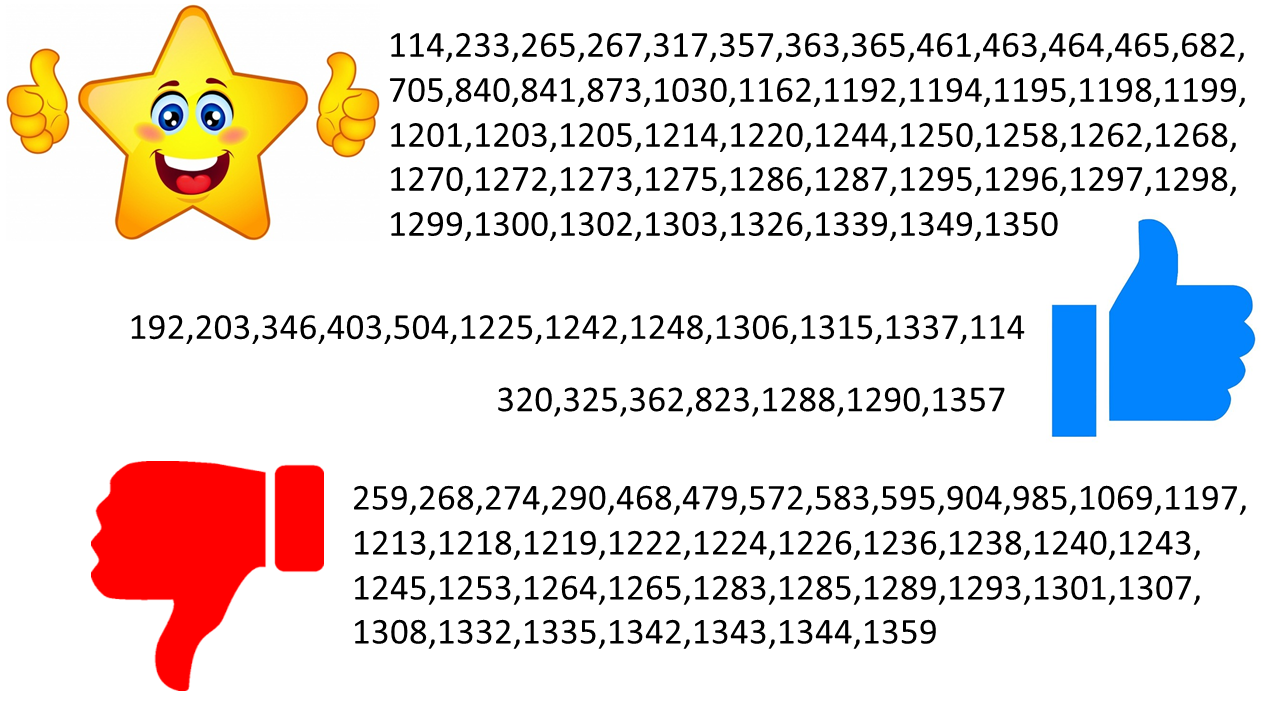
Over hundred people agreed to participate in our study. Half of them went through all the steps and let us see results of all their test kits (last digits of their IDs are listed next to the image of a star with thumbs up). Over a dozen submitted questionnaire with one or two samples - which was also very helpful. And almost half did not do anything (listed next to the red thumbs down sign). We understand that unforeseeable things happen, and  commitments may be difficult to fulfill. Still, it is worth to look if there is anything in common among those who did not submit samples and QoL questionnaires. Were those mostly our "new friends"? 
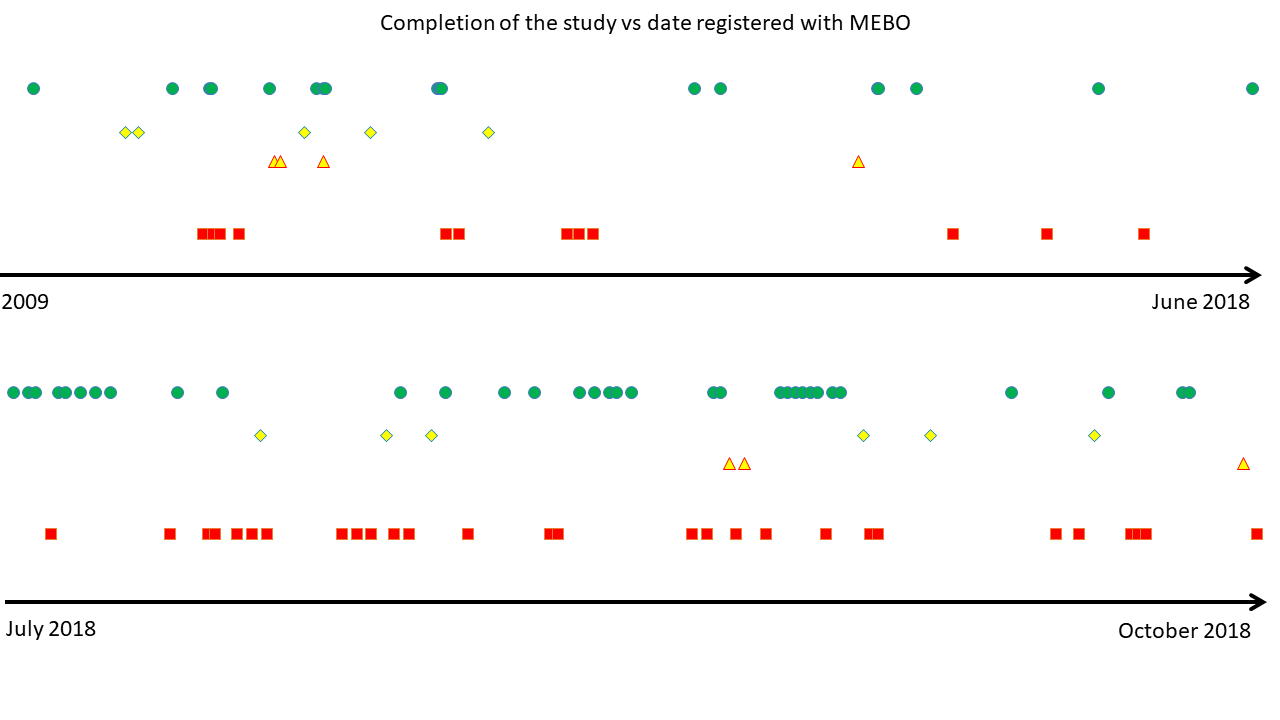
The answer is kind of, but it's not that simple.                                                                    
The figure shows when participants of our trial were registered with MEBO - before or after the first stages of our uBiome study. Percentage of those who did not return any samples was 30% for those who participated in prior MEBO activities vs 40% for newly signed individuals. (The ratio of our Study "Stars" vs those who did not return the kits to those who returned all kits and answered associated QoL questions was 60% for "old friends" vs 80% for "new friends"). Yet, the figure shows that "stars" (green circles) and "no-shows" (red squares) tend to "cluster", and possibly associate together.  Perhaps associations are indicators of the values we value? Show me your true friends and I'll tell you who you are?

REFERENCES

Al-Hamadi H, Chen R. Trust-based decision making for health IoT systems. IEEE Internet of Things Journal. 2017 Aug 4;4(5):1408-19.

Guo J, Chen R, Tsai JJ. A survey of trust computation models for service management in internet of things systems. Computer Communications. 2017 Jan 1;97:1-4.

Ahmed AI, Ab Hamid SH, Gani A, Khan MK. Trust and reputation for Internet of Things: Fundamentals, taxonomy, and open Research Challenges. Journal of Network and Computer Applications. 2019 Jul 26:102409.

Tang R, Lu L, Zhuang Y, Fong S. Not every friend on a social network can be trusted: an online trust indexing algorithm. In2012 IEEE/WIC/ACM International Conferences on Web Intelligence and Intelligent Agent Technology 2012 Dec 4 (Vol. 3, pp. 280-285). IEEE.

Arulselvi AC, Sendhilkumar S, Mahalakshmi GS. Provenance based Trust computation for Recommendation in Social Network. InProceedings of the International Conference on Informatics and Analytics 2016 Aug 25 (p. 114). ACM.

Sherchan W, Nepal S, Paris C. A survey of trust in social networks. ACM Computing Surveys (CSUR). 2013 Aug 1;45(4):47.


Thursday, February 22, 2018

Crowdsourcing Precision Medicine

Healthcare is evolving from one-size-fits-all to personalized, from reactive to preventive, from intuitive to data-driven, from paternalistic to participatory. Can crowdsourcing facilitate this transformation? 

Thursday, November 30, 2017

Fine Tuning Human Networks

Every intelligent entity - whether human or machine - depends not only on the configurations of its neurons, but also connections between itself and others entities, optimized for efficient exchange of information. Hence, better human networks providing training and feedback from others will lead to both smarter humans and better AI. 


Saturday, July 17, 2010

Collaboration 2.0


Information technology is letting people around the world come together in unprecedented ways. Wikis, blogs and microblogs like twitter, 
crowdsourcing and crowd-task-solving sites continue to flatten the planet.  
Scientific innovation used to be a very private endeavor, with narrowly specialized scientists delving deeply into specific research areas.  The Internet changed some of this giving rise to Wikipedia  - now orders of magnitude larger than the Encyclopedia Britannica, and similar wiki resources for gene annotations, RNA libraries, radiology images, open-source software and other content.
 
Science funding agencies may appear to be crowdsourcing solutions too - as they employ broad calls for proposals and utilize peer reviews to evaluate the proposed ideas. Their models , however, are not very effective in triggering societal impacts. They impede collaboration in many ways as the researchers are not truly working together and the feedback is not constructive. Reviewers are experts but not direct stakeholders of  proposed projects . They add management overhead (Latour, 1996).

One may argue that science is highly competitive and will always be driven by egos and desire for personal vs collective success. Yet, as Johnston and Hauser note, these very human needs could be met by more efficiently designed open source models, extending beyond snapshots of consensus,  enabling to capture specific contributions of each participant and  permanent record of the life history of the project from conception to completion.

The ease of discovery declines every year - scientists have to search for smaller asteroids, heavier chemical elements and more complicated connections. This has to be matched with either exponential increase in the number of scientists or more innovative collaboration.

People take pleasure in synchronized activities - such as singing or marching together, folding proteins or syncing their brains in a conversation.  Could scientists have meaningful conversations on unimaginable scales, conversations including citizen scientists and people whose health needs could be solved by science?
Some researchers are already using help from crowds collecting their donations to support research - like the recently started open-source research project to develop cure for neglected tropical disease schistosomiasis.
Or the Open Source PCR project supported by the public.

Recent call for collaboration asked for a framework to exchange and disseminate information,  produce guidelines and summarize finding for Participatory health research (PHR) addressing local health issues. Government agencies are using twitter and expect crowds to supply epidemiological metrics to test health policy efficacy.
Meanwhile, many are already utilizing google docs in the quest for collaborators and exchange of ideas. See for example this Folder of Useful Google Docs including:

Or check this call for collaborations in the microbiome and metabolome spaces, to solve neglected medical conditions.

Scientists, let's unite and start collaborating in even more creative ways!

ResearchBlogging.org


References 

Johnston SC, & Hauser SL (2009). Crowdsourcing scientific innovation. Annals of neurology, 65 (6) PMID: 19562693 
Wright MT, Roche B, von Unger H, Block M, & Gardner B (2010). A call for an international collaboration on participatory research for health. Health promotion international, 25 (1), 115-22 PMID: 19854843

Auer S, Braun-Thurmann H. Towards bottom-up, stakeholder-driven research funding — open science and open peer review: Available at:  http://www.informatik.uni-leipzig.de/~auer/publication/OpenScience.pdf.  Accessed May 21, 2009 

Lawrence PA (2009) Real Lives and White Lies in the Funding of Scientific Research. PLoS Biol 7(9): e1000197. doi:10.1371/journal.pbio.1000197


Marsh A, Carroll D, & Foggie R (2010). Using collective intelligence to fine-tune public health policy. Studies in health technology and informatics, 156, 13-8 PMID: 20543334 

Huss JW 3rd, Lindenbaum P, Martone M, Roberts D, Pizarro A, Valafar F, Hogenesch JB, & Su AI (2010). The Gene Wiki: community intelligence applied to human gene annotation. Nucleic acids research, 38 (Database issue) PMID: 19755503 

Latour, B. 1996. Aramis, or, The love of technology Harvard University Press, Cambridge, Mass 
Butler, D. (2010). Open-source science takes on neglected disease Nature DOI: 10.1038/news.2010.50
Facebook page, Just giving fundraiser page


Scientific collaboration: 
Idea Generation and Solving:

Crowd-Task-Solving and Freelance

  • World4brains, collaboration instead of competition for best ideas, advice and solutions - innovative payment system rewards all valuable input given
  • TaskRabbit,  linking over-stretched consumers with runners for errands, tasks and other to-do’s
  • oDesk - global marketplace for remote work
  • Elance - freelance marketplace
  • Guru - freelance community
  • Ki Work - sourcing online work
  • Amazon Mechanical Turk - micro-task crowdsourcing
  • HumanGrid - small online tasks solving
     

Crowd-Funding


    Sunday, March 28, 2010

    Health Data, Self-serve, Visualization, Semantic Analysis and Collective Intelligence

    Notes from the Biomedical Data Mining Camp Session led by Dr. Irene Gabashvili and other health-related discussions at Data Mining Camp and Transparency Camp 2010.

    The title for the session was "Biomedical Data Mining: Successes, Failures, and Challenges" (streamed online from Fireside C).
    The topic stemmed from the similarly named last year's session - Biomedical Data Mining: Dimensionality, Noise, Applications - now split into several discussions including Bioinformatics & Genome Sequencing organized by Raymond McCauley, Dimensionality Reduction moderated by Luca Rigazio (HLDA / HDA; LDPP; Core Vector Machines; Sparse Proj SQ; Random Projection and Feature Selection).

    Main sub-topics of the biomedical session were:
    • Reality Mining
    • Visualization
    • Imaging
    • Signal Processing
    Reality mining is expected to improve public health and medicine. It was named as one of "10 emerging technologies that could change the world". This is not only about mining data pertaining to social behavior - although social factors do impact well-being and social data provides valuable health predictors. It's also about health data collected in real and near real time. Audience asked about ways to collect health data and their limitations. Some of the questions reflected earlier Q&A with the Data Mining Camp expert panel , especially Dr. Michael Walker, author of numerous FDA and CLIA-approved products to diagnose and treat disease. He commented on the need to have tools well beyond the data available to take cell samples every two minutes instead of laboratory testing every few months - in order to allow cellular simulations and obtain parameters for differential equations. Sampling frequencies don't come close to allow this kind of modeling. Irene Gabashvili agreed that first-principles cellular modeling for predicting health won't be possible (although there are engineers that believe a platform for real-time in-vivo measurements of most cells can be developed). Yet, good predictors could be and will be developed - based on sensors measuring macro-level observations and missing value estimators. Genetic information is not enough, we need to capture environmental risk factors. How can we separate genes and environment?, asked one of the participants. Aurametrix' initial focus is on chemicals in our food - and even though some may argue that our taste and satiety mechanisms are dictated by genes, food analytics provides insights into non-genetic components of our health. Other questions were on the time line for body sensor networks and data growth. Jeffrey Nick of EMC estimates that personal sensor data will balloon from 10% of all stored information to 90% within the next decade. Irene Gabashvili thinks that this will happen rather sooner than later, perhaps in the next two years.

    Another interesting aspect of reality mining is crowdsourcing or collective intelligence - in order to get useful information from all the data (temporospatial location, GPS, activity, food, symptoms, behavior, communication content, proximity sensing), we need to analyze it not only on individual but also group level. We need to share more, without sacrificing privacy and security. Collective contributions can be reliable - Shamod Lacoui's answer to this is in selecting those who contribute, restricting inputs to domain. It would help to “filter out the dross”, while “saving the best”. It is needed to suppress noise, to infer intelligence from the collection of facts, clicks, steps, whatever one can contribute. This resonates with discussions at the Transparency Camp - one of the useful tools is SwiftRiver - free, open source software platform to validate and filter news. Swift relies on Natural Language Processing, Machine Learning and Veracity Algorithms to track and verify the accuracy of reports and suppress noise (like duplicate content, irrelevant cross-chatter and inaccuracies). Transparency Camp also posed a question on whether there is a need for an FDA-like institution to ensure information safety and healthy information consumption.

    Self-serve was a topic of a smaller Data Mining Camp Session. Even though it was aimed at sales reps that need to go beyond Excel spreadsheets to mine private data of their interest, self-service is currently the only option for health care consumers. People need to analyze everyday life for health implications. They need better tools to not focus on metrics that are easy to collect instead of metrics we need to collect.

    In order to mine high-dimensional health space, many disparate types of data should be mashed and validated, gaps should be bridged and structured metadata added to data. Randy Kerber talked about data formats and approaches to make it happen. Semantic web discussions involved NoSQL experts that mentioned limitations of gaining popularity technologies such as MongoDB, Cassandra and HBase. Another relevant session - on cloud computing - discussed its (sometimes over-rated ?) performance and Hadoop technologies.

    Visualization techniques provide one of the most effective methods of extracting knowledge from health data. Remember who invented the pie chart? That's right, it was Florence Nightingale, a nurse who needed a way to better represent her data. one of the most famous examples of visualizing epidemiological data was Dr. John Snow's map of deaths from a cholera outbreak in London, Many other techniques and software tools exist, but maps remain popular - especially google maps API. One of popular tools for epidemiological data is Google Maps API. For example, it embeds Google Maps into healthmap.org with JavaScript.

    One of the participants of Biomedical Session developed kidsdata.org (@kidsdata on twitter). It provides insights into geospatial autism statistics and visualizes trends and other useful health-related information.

    Another way to display geospatial data is Dynamic Choropleth Maps. Complex networks can be also explored with alluvial diagrams and other approaches. More visualization techniques and tools can be applied to health data - to look at the data in new ways and gain useful insights.

    Some of the questions from the audience were on the availability of data. Sources discussed included CDC (see, for example, NHANES laboratory files; eHealth metrics) and Entrez Life Sciences databases.

    Signal Detection and Signal Processing for Mining Information was another discussion topic.
    Questions were on data mining versus simple tracking and signal monitoring. It was agreed that data mining is the key to health management. Cardionet, body sensors (see posts on teletracking, M-health, Telemedicine: part 1; Telemedicine: part 2; Health 2.0 Software tools, Devices to keep you healthy), SNP detection, telemedicine applications, random and rare electrocardiographic events and other applications were also discussed.


    See other materials from Data mining Camp 2010:


    Reblog this post [with Zemanta]

    Monday, November 30, 2009

    blockquote { margin:1em 20px; background: #dfdfdf; padding: 8px 8px 8px 8px; font-style: italic; }