Showing posts with label covid-19. Show all posts

Tuesday, February 25, 2025

The Post-COVID Tenure Shift

Active lifestyle communities have long been a popular choice for older adults seeking wellness, social engagement, and a strong sense of community. Historically, residents in these communities have shown increasing tenure, with many staying well over a decade, drawn to the amenities and vibrant atmosphere. However, new research [1] reveals a striking shift: the median homeownership tenure has dropped post-COVID, reflecting a broader nationwide trend in homeownership duration. 

COVID-19 has caused a devastating loss of life in the U.S. The surge in mortality had a noticeable impact on national longevity: life expectancy at birth dropped by about 2.7 years over 2020–2021, falling from 78.8 years in 2019 to 76.1 years in 2021​. This marked the largest two-year decline in U.S. life expectancy in a century (since 1921–1923)​. Older adults experienced especially high COVID-19 death rates [2]​. 

Beyond acute infections, many COVID-19 survivors have endured long-term health issues, known commonly as Long COVID or post-COVID conditions. The pandemic’s impact on mental health is another significant health consequence, sometimes termed a “mental health crisis". The prolonged stressors of the pandemic – including illness and grief, social isolation, job loss, and uncertainty – led to sharp increases in anxiety, depression, and substance abuse nationwide. By late 2020, public health experts were warning of a “second pandemic” of mental health issues. 

The pandemic catalyzed major shifts in how and where people work in the United States. Perhaps the most visible change was the mass adoption of remote work. Given that remote work has allowed more people to move into scenic, retirement-friendly locations, one might expect tenure to increase rather than decrease. However, health consequences were likely outweighing this impact. 

Utilizing longitudinal surveys (2018, 2021, 2023, 2024) and property transaction records, researchers examined why residents in retirement-style communities are moving out sooner. While national housing trends have been influenced by economic uncertainty, remote work, and shifting homeownership dynamics, these factors alone do not fully explain the accelerated turnover in active lifestyle communities.

One might assume that dissatisfaction is a leading factor in shorter tenure, but this study found that resident satisfaction remains consistently high at 93%, far exceeding the national average for similar communities (~73%).

Another emerging trend is that newer and younger residents—those who settled in active lifestyle communities post-pandemic—are significantly more sensitive to financial costs than their older, long-term counterparts. This financial sensitivity is expected to influence governance decisions, amenity funding strategies, and overall community stability.

This shift in tenure presents both a challenge and an opportunity. If residents are leaving due to health concerns rather than dissatisfaction, community leaders should focus on enhancing wellness support, improving access to preventive healthcare, and fostering even stronger social connections.

At the same time, addressing financial concerns—especially among newer residents—will be crucial in maintaining the long-term viability of these communities. Adjusting amenity funding strategies and providing cost-effective solutions may help mitigate financial pressures and sustain resident satisfaction.

More research is needed to fully understand the evolving needs of active lifestyle communities, particularly in light of demographic shifts and economic pressures. However, one thing is clear: these communities must continue to adapt—not just to attract new residents, but to support existing ones in staying healthier and happier for longer.


REFERENCES

Irene S. Gabashvili, Christopher K. Allsup.  Resident Turnover and Community Satisfaction in Active Lifestyle Communities. February, 2025 arXiv:2502.15789 [stat.AP]  https://doi.org/10.48550/arXiv.2502.15789   

Gabashvili IS The Incidence and Effect of Adverse Events Due to COVID-19 Vaccines on Breakthrough Infections: Decentralized Observational Study With Underrepresented Groups JMIR Form Res 2022;6(11):e41914 doi: 10.2196/41914, PMID: 36309347, PMCID: 9640199

Listen to podcast

Friday, November 4, 2022

COVID-19: vaccines and infections

Personalized, precise and predictive vaccinology's holy grail is to anticipate immune response for every individual, depending on their genetic background and all other factors that may impact vaccine immunogenicity, efficacy, and safety.

The high expense of comprehensive genomic and immune-profiling tests, however, prohibits their routine use and this disproportionally affects underserved populations.

A new paper reports preliminary results of an ongoing study of COVID-19 vaccination in geographic neighborhoods and online health support groups. Due to innovative recruitment and monitoring strategies, the study has the largest representation of active "oldest old" - individuals aged 80 or older - than all other trials with diverse age groups. 

Despite widespread belief of a biphasic pattern for the frequency of systemic adverse events post-vaccination (VAEs), the paper reports statistically significant differences in the incidence of VAEs for both younger and 80+ populations when compared to those in the 60-69 and 70-79 age brackets. The subtypes of adverse events in younger and older populations are different. This short paper groups post-vaccination events in three types: "No or minimal VAEs", and short- or long-term reactions that significantly impacted activities of daily living.    

The paper suggests genetic origin for some adverse reactions. Scientists have only just begun to look into genetics of less common VAEs. HLA-A∗03:01 (contributing to low risk of severe COVID-19) was recently found to be associated with increased risk of stronger side effects (including fever and chills) from Pfizer-BioNTech COVID-19 vaccination. In another recent study, HLA-DQB1*06 alleles were found to protect from breakthrough infection during the ancestral SARS-CoV-2 virus and subsequent Alpha-variant waves compared with non-carriers. Hopefully, more studies will follow. 


REFERENCE

Gabashvili IS. The Incidence and Effect of Adverse Events Due to COVID-19 Vaccines on Breakthrough Infections: Decentralized Observational Study With Underrepresented Groups. JMIR Form Res. 2022 Nov 4;6(11):e41914. doi: 10.2196/41914. PMID: 36309347.

Current Impact score of the journal is: 2.38 (Resurchify)

JMIR Formative Research has been accepted for the Web of Science: Emerging Sources Citation Index. The journal will receive a Journal Impact Factor in 2023. 

Monday, May 16, 2022

Resolving the subtypes of COVID-19 in the elderly

SARS-Cov-2 is one of the most complex viruses known to medical science. Patients with COVID-19 present a broad spectrum of clinical manifestations, ranging from asymptomatic infection to lethal outcome. Both the young and the old may have very different clusters of symptoms and responses to medications, including the COVID-19 vaccines.  Each type is associated with how severe of an illness a patient might experience, ranging from asymptomatic to lethal. 


Precision medicine approaches such as whole-exome sequencing can provide insight into the phenotypes, endotypes and underlying mechanisms of the disease. The high cost of cutting-edge approaches, however, keeps these tools out of reach for many research teams. 

In this age of big data and large clinical studies, we should not forget about the value of individual cases. A good case report tells a detailed story. It describes a unique phenotype and offers unique clues to its resolution into an endotype. 

A new systematic review of case reports aims to answer questions about COVID-19 subtypes in octogenarians, nonagenarians, and centenarians and offer possible solutions to organize the knowledge and identify the gaps. 


REFERENCE

Irene S. Gabashvili. The outcomes of COVID-19 vaccination and SARS-CoV-2 infection in octogenarians, nonagenarians, and centenarians. PROSPERO 2022 CRD42022332621 Available from: https://www.crd.york.ac.uk/prospero/display_record.php?ID=CRD42022332621

Irene S. Gabashvili (2022), “COVID-19 vaccine and SARS-CoV-2 in the oldest old: rapid literature review”, Mendeley Data, v1 http://dx.doi.org/10.17632/6sk33d9z7s.1 https://data.mendeley.com/datasets/6sk33d9z7s/1

Irene S. Gabashvili (2022), “The Outcomes of COVID-19 and Vaccination in the Oldest Old: a Longitudinal Observational Study and Literature Review”, April 2022, DOI: 10.13140/RG.2.2.15625.93285

Saturday, December 25, 2021

Myocarditis and COVID-19: for some people the risk may be higher following vaccination than infection

COVID-19 is a known cause of cardiac complications such as myocarditis and systolic dysfunction. Vaccine associated myocarditis was described following smallpox vaccination, streptococcal pneumonia and influenza vaccine. In some cases, autoimmune/inflammatory syndrome induced by adjuvants used in the vaccine have been also implicated. 

Associations of COVID-19 vaccination and myocarditis have been proposed in multiple publications, but the consensus was that the benefits of vaccine are worth the increased risk even though more personalized approach seems warranted by the evidence.

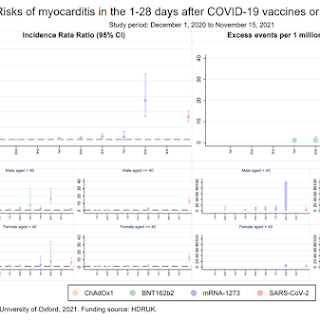
A new study presents data about the risk of myocarditis increasing with each subsequent dose of mRNA vaccines, especially mRNA-1273. Moreover, in younger males the risk of myocarditis was higher following vaccination than infection. Another study presents a case of fatal breakthrough infection in an older male who experienced myocarditis-like symptoms after his COVID-19 vaccine. Retrospective cohort study of 196,992 adults in Israel did not observe an increased incidence of neither pericarditis nor myocarditis in unvaccinated adult patients recovering from COVID-19 infection. See example case reports

REFERENCES

Martina Patone, Winnie Xue Mei, Lahiru Handunnetthi, Sharon Dixon, Francesco Zaccardi, Manu Shankar-Hari, Peter Watkinson, Kamlesh Khunti, Anthony Harnden, Carol AC Coupland, Keith M. Channon, Nicholas L Mills, Aziz Sheikh, Julia Hippisley-Cox Risk of myocarditis following sequential COVID-19 vaccinations by age and sex  medRxiv 2021.12.23.21268276; doi: https://doi.org/10.1101/2021.12.23.21268276

Kim HW, Jenista ER, Wendell DC, Azevedo CF, Campbell MJ, Darty SN, Parker MA, Kim RJ. Patients with acute myocarditis following mRNA COVID-19 vaccination. JAMA cardiology. 2021 Oct 1;6(10):1196-201.

Lazaros G, Anastassopoulou C, Hatziantoniou S, Kalos T, Soulaidopoulos S, Lazarou E, Vlachopoulos C, Vassilopoulos D, Tsakris A, Tsioufis C. A case series of acute pericarditis following COVID-19 vaccination in the context of recent reports from Europe and the United States. Vaccine. 2021 Oct 29;39(45):6585-90.

Hendren NS, Carter S, Grodin JL. Severe COVID-19 vaccine associated myocarditis: Zebra or unicorn?. International journal of cardiology. 2021 Nov 15;343:197-8.

===================================================================

Thursday, December 16, 2021

Cutaneous manifestations of SARS-CoV-2 and COVID-19 vaccines

 COVID-19 is associated with a wide range of skin signs. 


The following six main clinical patterns have been proposed for such manifestations most recently: (i) urticarial rash, (ii) confluent erythematous/maculopapular/morbilliform rash, (iii) papulovesicular exanthem, (iv) chilblain-like acral pattern, (v) livedo reticularis/racemosa-like pattern, and (vi) purpuric "vasculitic" pattern. Livedo or necrosis - blotchy red or blue appearance with a net-like pattern - was associated with increased disease severity while measles-like (morbilliform) rash was generally seen in patients with moderate to severe infection (like in the patient shown on the left who died) and pseudo-chilblains, a late sign of COVID-19, was associated with decreased severity and more likely to happen for younger patients. The median duration of chiblain-like acral pattern, however, was significantly longer that all other patterns. One study of 200 patients found the following frequencies of these signs: 10.2% for Urticarial rash; 25.7% for confluent erythematous/maculo-papular/morbilliform rash; 15.5% for papulovesicular exanthem, 24.6% for a chilblain-like acral pattern; 2.1% for a livedo reticularis/racemosa-like pattern; and 6.9% for a purpuric vasculitic pattern. 15% of skin patterns were not clearly classified while 6.5% had more than one pattern present.

The prevalence of cutaneous involvement was 7.8% in a binational Chinese-Italian cohort of 678 hospitalized adults with laboratory-confirmed disease. Dermatologic reactions after COVID-19 vaccines have been also reported and can mimic SARS-CoV-2 infection itself (eg, pernio/chilblains). The prevalence was the highest after the 2nd dose of mRNA-1273 (over 12% in Moderna), although only 1-2% experienced it with ChAdOx1 nCov-19 vaccine (AstraZeneca).

Delayed large local reactions were most common among vaccinees, followed by local injection site reactions, urticarial eruptions, and morbilliform eruptions. In a study of 414 people, forty-three percent of patients with first-dose reactions experienced second-dose recurrence. Additional less-common reactions included pernio/chilblains, dyshidrotic eczema, psoriasiform dermatitis, cosmetic filler reactions, zoster, herpes simplex flares, and pityriasis rosea-like reactions. 

Some of more serious reactions could be exacerbation of Erythema multiforme. It mostly happens in mild form of a sudden rash that goes away in a few weeks but could progress to larger raised patches that look like a target or "bulls-eye" and may have a blister or crust. Relapses of autoimmune bullous disease have been also reported as well as new onset Lichen planus, immune complex vasculitis or flares of subacute cutaneous lupus erythematosus, psoriasis and atopic dermatitis. 

Morphologic misclassification is, however, possible. 


REFERENCES

Tan SW, Tam YC, Oh CC. Skin manifestations of COVID-19: A worldwide review. JAAD international. 2021 Mar 1;2:119-33.

Slimani Y, Abbassi R, El Fatoiki FZ, Barrou L, Chiheb S. Systemic lupus erythematosus and varicella‐like rash following COVID‐19 in a previously healthy patient. Journal of Medical Virology. 2021 Feb;93(2):1184-7.

Genovese G, Moltrasio C, Berti E, Marzano AV. Skin manifestations associated with COVID-19: current knowledge and future perspectives. Dermatology. 2021 Jan 1:1-2. 

Marzano AV, Genovese G, Moltrasio C, Gaspari V, Vezzoli P, Maione V, Misciali C, Sena P, Patrizi A, Offidani A, Quaglino P. The clinical spectrum of COVID-19–associated cutaneous manifestations: An Italian multicenter study of 200 adult patients. Journal of the American Academy of Dermatology. 2021 May 1;84(5):1356-63. 

Bogdanov G, Bogdanov I, Kazandjieva J, Tsankov N. Cutaneous adverse effects of the available COVID-19 vaccines. Clinics in Dermatology. 2021 Apr 27.

Rice SM, Ferree SD, Mesinkovska NA, Kourosh AS. The art of prevention: COVID-19 vaccine preparedness for the dermatologist. International journal of women's dermatology. 2021 Jan 12.


Friday, November 26, 2021

The Omicron

On 26 November 2021, WHO designated the variant B.1.1.529 a variant of concern, named Omicron. It is associated with substantial ability to evade immunity from prior infection. But many important questions about this variant's severity remain unanswered.
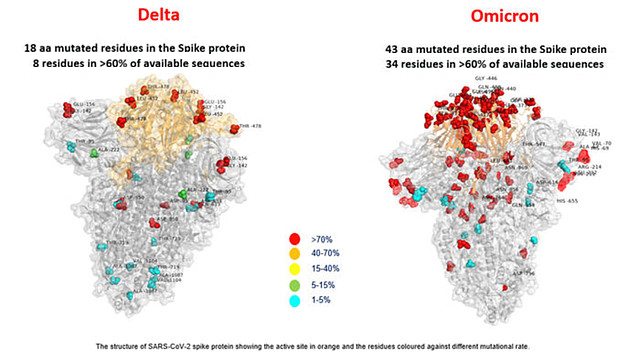
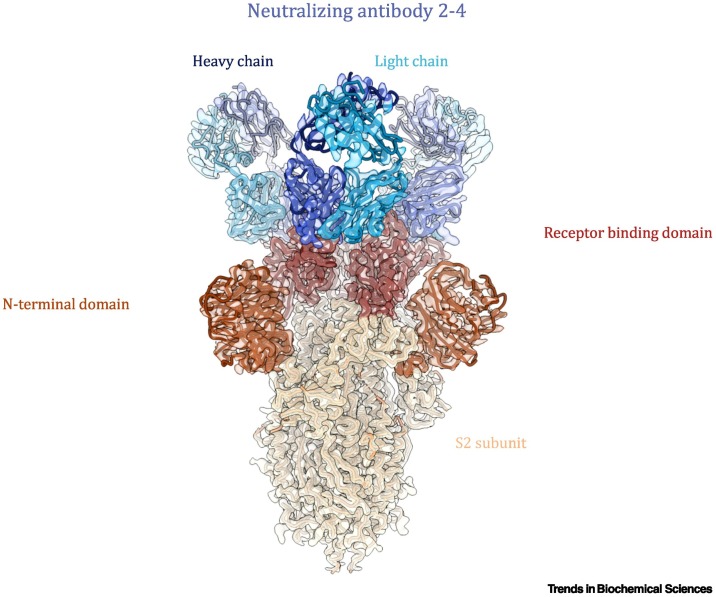
Omicron has more than 30 mutations in the spike protein targeted by COVID-19 vaccines. H655Y (Histidine at position 655 substituted by Tyrosine; first detected in Brazil) was previously shown to confer escape from human monoclonal antibodies. Another mutation borrowed from Gamma variant, N679K, may also increase infectivity.


Cases in US

California man who returned from South Africa mild (was fully vaccinated)

Minnesota man who recently traveled to NYC for a 3-day anime festival - mild (was fully vaccinated)

New York already had cases by that time one of which was a traveler returning from South Africa, 10 cases identified by December 5

Nebraska man who brought it from Nigeria and passed it to 5 other people, only one of whom was vaccinated

Wisconsin man tested positive for Omicron after a recent trip to South Africa 

The 1st Hawaii case is a 65 with no history of travel outside state who already had COVID-19 before. 

A middle-aged woman who recently traveled from South Africa became both New Jersey and Georgia’s first confirmed case after seeking care for moderate symptoms at an emergency room. 

640 deaths since Omicron dominant in South Africa

1st death confirmed in UK on Dec. 13 2021


REFERENCES

Juliet R.C. Pulliam, Cari van Schalkwyk, Nevashan Govender, Anne von Gottberg, Cheryl Cohen, Michelle J. Groome, Jonathan Dushoff, Koleka Mlisana, Harry Moultrie Increased risk of SARS-CoV-2 reinfection associated with emergence of the Omicron variant in South Africa  medRxiv 2021.11.11.21266068; doi: https://doi.org/10.1101/2021.11.11.21266068 

Rapp M, Shapiro L, Frank J. Contributions of single-particle cryoelectron microscopy toward fighting COVID-19. Trends in biochemical sciences.:S0968-0004.

Liu L., et al. Potent neutralizing antibodies against multiple epitopes on SARS-CoV-2 spike. Nature. 2020;584:450–456.


Thursday, August 12, 2021

August 12

When we thought COVID-19 was over, as more individuals were vaccinated against the deadly virus, the fourth wave of the pandemic struck, fueling a rise in breakthrough infections. 

We have documented several cases of fatal breakthrough infections. Publishing it is not easy because of many biases. 

Science has been always linked to the politics of society. Current political polarization hinders not only effective COVID-19 pandemic mitigation measures but also impedes research on side effects of vaccines and fatal breakthrough infections in healthy individuals. Social media fuels the divide encouraging toxic discussion, favoring rude and disrespectful comments. 

Publishing bias is another issue since scientific journals prefer to publish positive results discriminating against negative or null results. 

But we have many documented cases from the COVID-back-to-normal study and information about other COVID victims from genealogy and other sources. Let the truth be told. 


REFERENCES

Berkessel J, Ebert T, Gebauer J, Jonsson T, Oishi S. Pandemics Initially Spread Among People of High (not Low) Social Status: Evidence from COVID-19 and the Spanish Flu. PsyArXiv, 12 Jan. 2021. [example of using genealogy sites for medical research]

Gabashvili IS. Community-Based Phenotypic Study of Safety, Tolerability, Reactogenicity and Immunogenicity of Emergency-Use-Authorized Vaccines Against COVID-19 and Viral Shedding Potential of Post-Vaccination Infections: Protocol for an Ambispective study. medRxiv. 2021 Jun 1. medRxiv 2021.06.28.21256779; doi: https://doi.org/10.1101/2021.06.28.21256779

blockquote { margin:1em 20px; background: #dfdfdf; padding: 8px 8px 8px 8px; font-style: italic; }