Eyeglasses are almost as old as the civilization itself. They have not changed much since Benjamin Franklin's bifocals in the 18th century. Nor were they made obsolete by laser surgery and contacts. Still, eyeglass technology leaves much to be desired. But new technologies are unfolding before our eyes...
Showing posts with label wearable. Show all posts
Sunday, February 12, 2017
Friday, April 1, 2016
Technology, Dreams and April Fool's Jokes
At least once per year, and more is likely better, laughter is the best medicine.
Today is April Fool's Day, when everybody from school-age kids to technology companies tried to trick people into believing into jokes.
Yet, as Sigmund Freud suggested, jokes often expose unconscious desires. Perhaps the technologies listed below, too, have a grain of our desires wrapped in a smile?
reproduced with permissions of Aurametrix


References (in addition to those provided above)
Smith, Julian. "Apps for apes: Orang-utans want iPads for Christmas." New Scientist 212.2844 (2011): 69-71.
(2000). April Fool's Day and the Medicinal Value of Humor. The virtual mentor : VM, 2 (4) PMID: 23270623Today is April Fool's Day, when everybody from school-age kids to technology companies tried to trick people into believing into jokes.
Yet, as Sigmund Freud suggested, jokes often expose unconscious desires. Perhaps the technologies listed below, too, have a grain of our desires wrapped in a smile?
reproduced with permissions of Aurametrix
Technology keeps marching ahead. And the future gets smarter with the Internet of Things. Here are a few announcements made today, on April 1 2016.
CONNECTED CAR

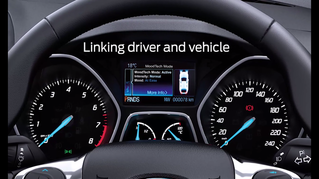
Ford Australia has announced new wearable technology connecting drivers to their car like never before. Based on ‘Mood-Ion Technology’, it would monitor a wearer’s body temperature and use cameras to track eye movement and feed this information into the vehicle. It is hard to foresee what exactlty the vehicle will do in response to driver's mood changes except powering lighting, but In selected Ford vehicles, there will be options to have the glove box retrofitted with a convection oven.
Lexus connects drivers and their cars too, using velcro adhesives to bond drivers to their V-LCRO seats.
And so does the new LeisureVans app offering to experience the power of driving in a fully autonomous RV. Using the latest advancements in software and ultrasonic hardware, their engineers have perfected the future of the self-driving vehicle. Just download an app from the App store and let it control your self-driving leisure travel van. While driving, the app will suggest you to get some coffee or have a snooze, if you look too tired. It will also make the car to wash itself when needed.
And if you don't even want to think about cars while enjoying a drive, use Ola rooms, converting cabs into mini-hotels coming to your door step. The room will drive by the views you like and restaurants you prefer. Although you could use Deliveroo’s telepathic food order to make it easier. And pre-lick food photos to make sure you like what you are ordering. Or order Google Express parachutes if you want to have your lunch right away.
Lexus connects drivers and their cars too, using velcro adhesives to bond drivers to their V-LCRO seats.
And so does the new LeisureVans app offering to experience the power of driving in a fully autonomous RV. Using the latest advancements in software and ultrasonic hardware, their engineers have perfected the future of the self-driving vehicle. Just download an app from the App store and let it control your self-driving leisure travel van. While driving, the app will suggest you to get some coffee or have a snooze, if you look too tired. It will also make the car to wash itself when needed.
And if you don't even want to think about cars while enjoying a drive, use Ola rooms, converting cabs into mini-hotels coming to your door step. The room will drive by the views you like and restaurants you prefer. Although you could use Deliveroo’s telepathic food order to make it easier. And pre-lick food photos to make sure you like what you are ordering. Or order Google Express parachutes if you want to have your lunch right away.
VIRTUAL REALITY
Google introduced Plastic Cardboard VR Headset proving that "the future is clear." "Google Cardboard Plastic combines everything you love about virtual reality headsets with everything you love about reality," the company said in a statement.
The goal is to make virtual reality feel more compelling, more immersed, make it feel like actual reality.
The innovative gadget allows users to view the world in 4 dimensions with 20/20 resolution and 360 degrees of sound - assuming that's what is provided by your own senses. But if you prefer to trust other people's senses - try "Snoopavision," a 360-degree viewing experience with rapper Snoop Dogg. After all, "Dre has Beats, Jay has Tidal, Kanye has himself and now the world has Snoopavision," as says promotional video.
And if Virtual Reality still doesn’t seem real enough, ThinkGeek offers VR rig that could spray you with water, shoot stuff at you with a built-in projectile launcher, emit scent, and ticket you with cat arms if you so desire.
The goal is to make virtual reality feel more compelling, more immersed, make it feel like actual reality.
The innovative gadget allows users to view the world in 4 dimensions with 20/20 resolution and 360 degrees of sound - assuming that's what is provided by your own senses. But if you prefer to trust other people's senses - try "Snoopavision," a 360-degree viewing experience with rapper Snoop Dogg. After all, "Dre has Beats, Jay has Tidal, Kanye has himself and now the world has Snoopavision," as says promotional video.
And if Virtual Reality still doesn’t seem real enough, ThinkGeek offers VR rig that could spray you with water, shoot stuff at you with a built-in projectile launcher, emit scent, and ticket you with cat arms if you so desire.
SMART HOME
Wi-fi-enabled pillow Duolingo is making education more convenient by offering to teach a language overnight. Thanks to synthetic fibers encouraging development in the cerebral cortex, high frequency sound system and a proprietary algorithm using Morse code to subtly teach the brain new language vocabulary and concepts in one's sleep.
There were more smart home announcements gimmicky enough to pass off as April fools jokes, but we won't be talking about them here.
WEARABLES
If you're struggling to keep up with your New Year's resolutions, consider JOLT - new Electrotherapy Fitness Shoes from Soft Star Shoes. High voltage sensors in the JOLT's footbed deliver an electric shock whenever you stop moving, while patented Lace-Lock™ technology makes the shoes impossible to remove - taking fitness motivation aids to "stunning" new heights.
We have certainly come a long way since the previous generation of wearables like Gluuv inspired by a Robocop movie (announced on April 1 2014 by HTC). The wearable could double as a self-defense device you’ll definitely want to have around if you ever find yourself in a Blade Runner-reminiscent décor.
Slightly less bulky Gloves announced by Samsung and Toshiba could use 25 appropriate fingergestures, replacing laptops, tablets, smartphones, fitness trackers, watches, glasses and any other future mobile innovation.
Perhaps we should come back to this later.
Slightly less bulky Gloves announced by Samsung and Toshiba could use 25 appropriate fingergestures, replacing laptops, tablets, smartphones, fitness trackers, watches, glasses and any other future mobile innovation.
Perhaps we should come back to this later.
Happy April Fool's Day!
References (in addition to those provided above)
Smith, Julian. "Apps for apes: Orang-utans want iPads for Christmas." New Scientist 212.2844 (2011): 69-71.
Friedman, Joseph H. "APRIL FOOL'S COMMENTARY: IN PRAISE OF PLACEBOS." Medicine and Health Rhode Island 89.4 (2006): 124.
Robertson R (1984). Science and technology - dreams and reality. Journal of dental research, 63 (3), 371-3 PMID: 6583238
Labels:
connected cars
,
Internet of Things
,
smart home
,
Technology
,
wearable
Saturday, November 21, 2015
Where Are All the Wearables We Want to Wear?
ORIGINALLY POSTED by AURAMETRIX, introductory post on Linkedin
Eyeglasses correcting vision appeared 700 years ago and moved into mass production phase as more books were printed and read. Yet, first wearers of glasses, monks and scholars, were stigmatized as weak and old until the early 1900s when the 29th US president Theodore Roosevelt and the king of comedy Harold Lloyd finally made glasses popular. Eyeglasses kept evolving but their primary function remained vision correction and eye protection. Google glass was an amazing technological accomplishment but we were not ready to put computers on our faces.
The first wearable HDTVs from Sony were inconvenient because of the bulky battery pack, and the surrounding waves seemed to reverberate through your skull. Even so, smart glasses are already developing loyal following in niche markets such as Augmented/Virtual Reality gaming and tools for persons with physical disabilities. Google glass is heading toward a second version, and so are second generation wearable TVs like recently launched Royole-X that combines high-resolution display with noise-cancelling headphones. Virtual reality is back with some incredible headsets in development, and the best is yet to come.
The first truly wearable watches were created 200 years ago, some 300 years after portable spring driven clocks. The first smartwatch appeared in 1977. Hewlett Packard’s HP-01 combined a personal calculator, an alarm clock, a stopwatch, a timer, and a 200 year calendar. Linux-based WatchPad developed by IBM and Citizen in 2001 featured a graphic display, Bluetooth and an accelerometer and were called a “popular publicity gimmick”. Smartwatches developed in the last decade run on processors and internal components designed for smartphones. As new electronic components are being created, watch designs are getting slimmer, more attractive and more functional. Smartwatches might have a chance.
Hearing aids introduced over 100 years ago, are examples of still existing and successful wearable technology. They evolved from cartoonish ear trumpets to digital hearing devices that do more than amplify sound. Many technical problems – such as background noise still remain, but developers are already working on merging more features – like health tracking capabilities or the ability to flip through songs with just the tilt of a head – to create the new wave of hearables.
Google Engineers Invent New Body Part To Strap Gadgets Onto. This was a satirical headline from Onion, but the truth is inventors have already tried every part of the human body as a surface for wearables.
Wearable storage evolved from clunky wooden trunks to small purses hung on one's belt (like Robin Hood's pouch) to pockets as we know them, sewn into trousers and dresses, in the late 1700s. Pockets went out of fashion in the 1790s, and women began to use handbags. They came back larger and plainer during the 19th century. Today's attempts at wearable storage vary from handbags with built-in-batteries to charge your favorite gizmos on the go, to microchips in clothes or implantable chips storing personal information for mobile payments, to wearable robots aka exoskeletons for lifting and carrying heavy loads.
But however strange some of the wearables may seem, they are the future and this future is ripe for growth.
Millions of years ago our ancestors straightened up and started carrying tools around, instead of dropping them after use. And so technology became a part of daily routine.
As time passed, more useful tools were made than it was feasible to carry or wear over the shoulder. One solution to this problem was monetary exchange, the other was a better technology. Wearables promised to add more convenience than carryables and, ever since humans started to wear clothes some 170,000 years ago, there was no lack of attempts to turn useful products into wearables. But this was not easy.
Eyeglasses correcting vision appeared 700 years ago and moved into mass production phase as more books were printed and read. Yet, first wearers of glasses, monks and scholars, were stigmatized as weak and old until the early 1900s when the 29th US president Theodore Roosevelt and the king of comedy Harold Lloyd finally made glasses popular. Eyeglasses kept evolving but their primary function remained vision correction and eye protection. Google glass was an amazing technological accomplishment but we were not ready to put computers on our faces.
The first wearable HDTVs from Sony were inconvenient because of the bulky battery pack, and the surrounding waves seemed to reverberate through your skull. Even so, smart glasses are already developing loyal following in niche markets such as Augmented/Virtual Reality gaming and tools for persons with physical disabilities. Google glass is heading toward a second version, and so are second generation wearable TVs like recently launched Royole-X that combines high-resolution display with noise-cancelling headphones. Virtual reality is back with some incredible headsets in development, and the best is yet to come.
The first truly wearable watches were created 200 years ago, some 300 years after portable spring driven clocks. The first smartwatch appeared in 1977. Hewlett Packard’s HP-01 combined a personal calculator, an alarm clock, a stopwatch, a timer, and a 200 year calendar. Linux-based WatchPad developed by IBM and Citizen in 2001 featured a graphic display, Bluetooth and an accelerometer and were called a “popular publicity gimmick”. Smartwatches developed in the last decade run on processors and internal components designed for smartphones. As new electronic components are being created, watch designs are getting slimmer, more attractive and more functional. Smartwatches might have a chance.
Hearing aids introduced over 100 years ago, are examples of still existing and successful wearable technology. They evolved from cartoonish ear trumpets to digital hearing devices that do more than amplify sound. Many technical problems – such as background noise still remain, but developers are already working on merging more features – like health tracking capabilities or the ability to flip through songs with just the tilt of a head – to create the new wave of hearables.
Google Engineers Invent New Body Part To Strap Gadgets Onto. This was a satirical headline from Onion, but the truth is inventors have already tried every part of the human body as a surface for wearables.
Wearable storage evolved from clunky wooden trunks to small purses hung on one's belt (like Robin Hood's pouch) to pockets as we know them, sewn into trousers and dresses, in the late 1700s. Pockets went out of fashion in the 1790s, and women began to use handbags. They came back larger and plainer during the 19th century. Today's attempts at wearable storage vary from handbags with built-in-batteries to charge your favorite gizmos on the go, to microchips in clothes or implantable chips storing personal information for mobile payments, to wearable robots aka exoskeletons for lifting and carrying heavy loads.
But however strange some of the wearables may seem, they are the future and this future is ripe for growth.
REFERENCES
Toups MA, Kitchen A, Light JE, & Reed DL (2011). Origin of clothing lice indicates early clothing use by anatomically modern humans in Africa. Molecular biology and evolution, 28 (1), 29-32 PMID: 20823373
Bouzouggar A, Barton N, Vanhaeren M, d'Errico F, Collcutt S, Higham T, Hodge E, Parfitt S, Rhodes E, Schwenninger JL, Stringer C, Turner E, Ward S, Moutmir A, & Stambouli A (2007). 82,000-year-old shell beads from North Africa and implications for the origins of modern human behavior. Proceedings of the National Academy of Sciences of the United States of America, 104 (24), 9964-9 PMID: 17548808
Mombers C, Legako K, & Gilchrist A (2015). Identifying medical wearables and sensor technologies that deliver data on clinical endpoints. British journal of clinical pharmacology PMID: 26542184
Sungmee Park, & Jayaraman S (2014). A transdisciplinary approach to wearables, big data and quality of life. Conference proceedings : ... Annual International Conference of the IEEE Engineering in Medicine and Biology Society. IEEE Engineering in Medicine and Biology Society. Annual Conference, 2014, 4155-8 PMID: 25570907
Labels:
Disruptive technology
,
Health Systems
,
Technology
,
wearable
Saturday, September 6, 2014
Is the Internet of Things the Real Thing?
The Internet of Things: an exciting new world with a digital nervous system or a nightmare where objects take decisions while we are unconscious?
15 years ago, when the term was first coined, it was about assigning everything around us a unique identity with RFID tags, to enable all material things to talk to each other and save us time for gathering and using information. As RFID tags dropped below 1 cent cost, and sensors, modems and devices are getting smaller, smarter and cheaper, this vision is moving closer to reality.
The latest Gartner's Hype Cycle (August 2014) places the Internet of Things at the peak of Inflated Expectations, while Big Data evolving in tandem with IoT has already started to fall into the through of disillusionment, getting ready to join mobile health and cloud computing right there on the bottom of the through.


Consumers are not ready to embrace the flood of smart wearables and appliances - as they don't really know what to do with them, don't perceive their value and are concerned about privacy and prices.
15 years ago, when the term was first coined, it was about assigning everything around us a unique identity with RFID tags, to enable all material things to talk to each other and save us time for gathering and using information. As RFID tags dropped below 1 cent cost, and sensors, modems and devices are getting smaller, smarter and cheaper, this vision is moving closer to reality.
The latest Gartner's Hype Cycle (August 2014) places the Internet of Things at the peak of Inflated Expectations, while Big Data evolving in tandem with IoT has already started to fall into the through of disillusionment, getting ready to join mobile health and cloud computing right there on the bottom of the through.


Consumers are not ready to embrace the flood of smart wearables and appliances - as they don't really know what to do with them, don't perceive their value and are concerned about privacy and prices.
Clay Christensen's theory of "disruptive technology" emphasizes that technologies tend to get better at a faster rate than users' needs increase. Next Big Thing often starts as an expensive "toy". When the telephone was first introduced it could only be afforded by the rich and it could only carry a signal over a short distance. If Watson really had said in 1943 that "there is a world market for maybe five computers", as Gordon Bell pointed out much later, it would have held true for some ten years.
The first generation of IoT devices fell short of user needs and was rather primitive. Over a third of people who bought a smart wearable abandoned it a few months later. Yet, the "new" has never been hotter. It seems a new wearable is launching every week and we are constantly waiting for something newer and better, hoping it will finally answer the question "what can we do now that we could not do before?"
However, the current generation of "smart things" is focused mostly on better designed hardware and higher-end consumers. Fashionable elegant-looking devices are supposed to make wearables more appealing and "design thinking" is one of today's hottest buzzwords. Withings Activité, Fitbit pendants from Tory Burch, Yves Béhar's designed Vessyl, Diane Von Furstenberg's Google glass, Rebecca Minkoff's tech-enabled jewelry, and the new bracelet from Intel - MICA - highlighted by pearls and other precious stones - are getting ready to conquer attention of consumers and developers. Especially developers - as the size of the market will depend on the number of developer-entrepreneurs creating value in it.
The app economy taught hardware manufacturers that when people experiment they find ways to create value, often in unexpected ways. But it also taught developers that they need to invest considerable time to build a marketable app and the chances of that app to make money are about 1 in 25,000. As the average age of developers keeps decreasing getting into the middle and high school years, the main benefit of app development becomes education and learning by itself. But will this be sufficient for the Internet of Things or will inter-networked things remain a toy for the wealthy?
Labels:
Clayton Christensen
,
Disruptive technology
,
Intel
,
Internet of Things
,
sensors
,
smart home
,
Technology
,
wearable
Sunday, April 13, 2014
The Curse of the Internet
It's hard to imagine our lives without the
Internet - either mobile or desktop.
The Internet has become a catalyst of innovation, an essential tool in business and social life. It brought new levels of participation and access to knowledge. It enabled new forms of interaction, albeit mostly utilized for entertainment purposes (as in the famous answer of a Reddit user to a now deleted question captured in the figure on the right).
But despite all the advantages and conveniences, does the Internet really serve us or is it the other way around?
Internet companies, large and small, are quietly but forcefully collecting our life's data hoping to have us "on the leash."
If people want to use a web service, the service gets away with almost anything. Google knows about our friendships, content of gmail and google voice conversations. They see the places we go or want to go on maps and how we spend time on millions of websites. Amazon knows about our tastes and interests, phone carriers have nearly minute-by-minute accounts of months and years of our lives, credit card companies are building our psychographic profiles. Target stores can figure out their customers' health conditions before they do... and if you think other companies are better protecting sensitive information (remember the giant data breach?), think again.
Discovered this week, major security flow dubbed "Heartbleed" had existed for over two years. The defect in encryption technology used by many websites and networking equipment makers have put millions of passwords and other sensitive information at risk. Just another reminder of why you should scrutinize the security on the Internet and other web-connected gadgetry.
Vulnerabilities can be found everywhere. The network of a big oil company was hacked through the online menu of a Chinese restaurant popular with employees. Target was breached through its heating and cooling system. Printers, thermostats, videoconferencing equipment, household items, even vending machines and gas pumps can be used to gain access to your data. And so can employees of the companies collecting data. Last year there were multiple cases when stolen patient identification information was used to file unauthorized income tax returns.
Recently published SANS healthcare cyberthreat report reveals that health care networks (hospitals, insurance carriers, pharmaceutical companies, web sites, software and devices) - have been and continue to be compromised by successful cybercriminal attacks. Health networks seem to have the weakest Internet security among sites dealing with sensitive information, often not addressing very basic issues, vulnerable to off-line password guessing and user impersonation attack.
Trust is especially important in health care. As the days of blind trust that 'doctor knows best' are becoming a distant memory, new cases of security breaches can lower the trust further discouraging use of digital health services and disclosure of important medically relevant information.
At present, most digital health products and corporate wellness programs fail both companies and patients. There are many fundamental flaws responsible for that. And the lack of trust is not going to make it any more successful.
Paraphrasing Derek Thompson's passage about Facebook and Amazon, for the Internet of Things for Health and Wellness to succeed, we have to embrace a new version of intimacy that felt natural when the good old-fashioned country doctor made house calls. The machines have to know us. Will we let them?
REFERENCES
Internet - either mobile or desktop.
The Internet has become a catalyst of innovation, an essential tool in business and social life. It brought new levels of participation and access to knowledge. It enabled new forms of interaction, albeit mostly utilized for entertainment purposes (as in the famous answer of a Reddit user to a now deleted question captured in the figure on the right).
But despite all the advantages and conveniences, does the Internet really serve us or is it the other way around?
Internet companies, large and small, are quietly but forcefully collecting our life's data hoping to have us "on the leash."
If people want to use a web service, the service gets away with almost anything. Google knows about our friendships, content of gmail and google voice conversations. They see the places we go or want to go on maps and how we spend time on millions of websites. Amazon knows about our tastes and interests, phone carriers have nearly minute-by-minute accounts of months and years of our lives, credit card companies are building our psychographic profiles. Target stores can figure out their customers' health conditions before they do... and if you think other companies are better protecting sensitive information (remember the giant data breach?), think again.
Discovered this week, major security flow dubbed "Heartbleed" had existed for over two years. The defect in encryption technology used by many websites and networking equipment makers have put millions of passwords and other sensitive information at risk. Just another reminder of why you should scrutinize the security on the Internet and other web-connected gadgetry.
Vulnerabilities can be found everywhere. The network of a big oil company was hacked through the online menu of a Chinese restaurant popular with employees. Target was breached through its heating and cooling system. Printers, thermostats, videoconferencing equipment, household items, even vending machines and gas pumps can be used to gain access to your data. And so can employees of the companies collecting data. Last year there were multiple cases when stolen patient identification information was used to file unauthorized income tax returns.Recently published SANS healthcare cyberthreat report reveals that health care networks (hospitals, insurance carriers, pharmaceutical companies, web sites, software and devices) - have been and continue to be compromised by successful cybercriminal attacks. Health networks seem to have the weakest Internet security among sites dealing with sensitive information, often not addressing very basic issues, vulnerable to off-line password guessing and user impersonation attack.
Trust is especially important in health care. As the days of blind trust that 'doctor knows best' are becoming a distant memory, new cases of security breaches can lower the trust further discouraging use of digital health services and disclosure of important medically relevant information. At present, most digital health products and corporate wellness programs fail both companies and patients. There are many fundamental flaws responsible for that. And the lack of trust is not going to make it any more successful.
Paraphrasing Derek Thompson's passage about Facebook and Amazon, for the Internet of Things for Health and Wellness to succeed, we have to embrace a new version of intimacy that felt natural when the good old-fashioned country doctor made house calls. The machines have to know us. Will we let them?
Pogue D (2014). The curse of the cloud. Scientific American, 310 (2) PMID: 24640327
The SANS-Norse Healthcare Cyberthreat Report: http://norse-corp.com/HealthcareReport2014.html
Subscribe to:
Posts
(
Atom
)