Showing posts with label Technology. Show all posts

Tuesday, April 1, 2025

April 1, 2025: The Fine Line Between Product and Punchline

On this April Fools' Day in 2025 the line between absurdity and innovation has never been blurrier. From Anova's oven affirmations ("You're not overcooked, you're emotionally complex") to Razer’s Skibidi headset designed to decode Gen Z's in-game lingo, tech pranks continue to reflect our ever-evolving relationship with technology.  Skibidit translates phrases thrown out by young gamers such as, "What the sigma? We're getting mobbed," which means, "Your team needs support." And "I think you're cute" becomes "ni hao fine shyt." New voice in ChatGPT also sounded like a teenager you just woke up from a nap. Lots of exaggerated sighs and sarcastic quips.

While we laugh, there's often a subtle truth behind even most absurd jokes – a nod to how technology can shape our lives, for better or worse. Perhaps in a world where we are trying to replace bike rides and walks (e.g., with KICKR EARTH,  by Wahoo) and touch grass virtually via Dbrand’s latest skin (a remake of keyboards from 2022), the real punchline is that the future is here, and it's a little more ridiculous than we ever imagined. 

We heard about gaming chairs, now meet Elgato’s Streaming Desks. It's actually a control panel with 1,262 customizable keys, for streamers and content creators who need every shortcut imaginable. Probably with plenty of "any keys", as well, The absurdity of turning an entire desk into a giant, impractical Stream Deck—complete with a premium walnut finish—hits the sweet spot of tech humor: it’s ridiculous yet just plausible enough to make you double-check the date. The over-the-top nature of it, paired with Elgato’s reputation for streaming gear, probably had people chuckling and wishing it were real (or not).

Artificial Peripheral intelligence (or API) by  @deviparikh and @yutori_ai marks new era of agentic computer use. Your levitating mouse powered with AI will do all the work for you

On the wearables front, UK's mattress company, the Odd Company has unveiled the “City Napper,” a £350 portable mattress designed for commuters who struggle to leave their beds in the morning. This “wearable mattress” comes with a wraparound headrest and quilted poncho, pitched as the ultimate commuting companion for napping on public transit. It provides neck support and warmth while keeping germs at bay – perfect for catching extra sleep on the go. It’s impractical in the best way—imagine someone waddling onto a subway wrapped in a mattress—and nails the wearable tech trend of solving first-world problems with over-engineered flair. Whether you're facing rain or shine, the Babybel Wax Sleeping Bagwill (from nostalgic snack cheese brand Babybel) will add more comfort and warmth, much like a cheese toastie - keeping you snug and toasty no matter the weather.

Another wearable-adjacent prank was Nothing’s “Ear (3.5mm),” a pair of wired earbuds with a comically long 50-meter cable, mocking the wireless trend while pretending to cater to audiophiles who miss the old days.

Protein Works has launched Doms Proteinon, an alcohol-free protein-packed version of Dom PĂ©rignon champagne. Terry’s Chocolate is revolutionizing oral care with their “Chocolate Mint Toothpaste” combining dental hygiene with popular chocolate mint flavor. Aldi stores across Scotland have launched “Taps Aff,” a 100% natural alcohol alternative made from beloved Scottish tap water, one of the things Scots are so proud of! Sports drink company Bodyarmor launched a Sports Performance Shampoo packed with electrolytes and vitamins. Heck Food, renowned for its gluten-free sausages, burgers, and more, introduced Matcha Chipolatas. Gluten free, high protein lean chicken sausages spiced with Matcha Green tea. Wellness and sausages – a Match-a made in heaven?

 April Fool's Day tech jokes have evolved significantly over the years. Initially, they often revolved around futuristic ideas that seemed absurd at the time but later inspired real innovations. Examples include Google's "MentalPlex" search by thought (2000), a predecessor of Google's Assistant and "Google Pigeon Internet" (2000), later launched as Google's Project Loon. Apple AirPods Pro with "EarFit"(2020) turned into AirPods Pro (2nd generation) released next year. These pranks hinted at creative concepts rooted in technology, reflecting optimism and imagination about technological possibilities. They were also used as a way to gauge people's enthusiasm about new ideas. Later,  jokes started to focus on absurdity or satire rather than inspiring dreams of the future. For instance, Miz Mooz's Selfie Shoes with built-in cameras that automatically take selfies every time you take a step(2015) exaggerated society's obsession with selfies. Uber Kittens" (2017), a service where you could have kittens delivered to you by Uber for a few minutes of cuddling, was both heartwarming and completely absurd. 

The rapid pace of technological advancements has made it harder to surprise audiences with futuristic concepts. People are now so accustomed to groundbreaking innovations that the impact of such jokes has diminished. Additionally, companies may steer clear of elaborate pranks due to concerns about misinformation or backlash. For instance, Google halted its April Fool's Day jokes in 2020, citing the global pandemic and a shift in focus toward more serious matters. As a result, humor has shifted increasingly toward absurdity and satire, reflecting current societal trends rather than aspirational visions of the future. 

Yet, despite these shifts, there are still some genuinely creative ideas that come out of April Fools' Day pranks. At their best, these jokes remain not only enjoyable but also thought-provoking, offering a playful glimpse into what could be possible—or absurd—tomorrow. The tradition of humor through technology continues to evolve, keeping us laughing and questioning the world around us.


REFERENCES

John Kanellakos picks: https://www.pocket-lint.com/april-fools-day-2025-tech-roundup/
Andrew Liszewski's story://www.theverge.com/news/638284/dbrand-touch-grass-skin-tablet-smartphone-handheld-console
The Verge staff: https://www.theverge.com/news/639824/april-fools-day-2025-pranks-jokes-best-worst
Amaete Umanah: https://x.com/amaeteumanah/status/1907219854681342026
https://www.famouscampaigns.com/2025/04/april-fools-2025-round-up/
https://x.com/yutori_ai

Monday, April 1, 2024

April Fools' Day 2024: Reflecting Our Digital Psyche

It's April Fools' Day, a time when tech companies, big and small, roll out their most outrageous, bizarre, and occasionally plausible inventions and announcements. It's another day of hoaxes in an internet landscape already teeming with misinformation and pranks. Yet, we find ourselves embracing this annual tradition, which never fails to elicit a mix of amusement, confusion, and sometimes, a hint of annoyance.

April 1st is not just about laughter; it's a day that offers a peek into our collective psyche. It's an opportunity to step beyond our everyday reality and imagine a world with a twist, sometimes bringing our most far-fetched tech fantasies closer to reality. This year, as artificial intelligence becomes increasingly integral to our lives, we find humor in its absurdities and potential—from gaming chairs with AI-powered tentacles to oversized repair tools that fix a device while a dozen more learn to self-repair, to the beyond-AI living pet rocks.

Reflecting on the past, we're reminded of Gmail's debut as an April Fools' joke exactly two decades ago—a service that has since become a staple in our digital lives. In 2009, Google introduced CADIE - AI assistant that can code. Fast forward to 2024, and we see Budsie's AI-enabled dolls enabled dolls "programmed to learn everything about you" and Razer's Cthulhu gaming chair offering AI-powered tentacles to cater to your every need, blurring the lines between fiction and the near-future possibilities of AI.

In 2022, Razer unveiled the Enki Pro HyperSense haptic chair at CES, offering vibrations and shakes synchronized with games, TV, and movies. Razer technology, introduced on April 1st, 2022, included a full-body gaming suit aimed at immersing users by simulating physical sensations and emotions through haptic feedback. In 2024, we witness a more refined iteration, reminiscent of the future depicted in WALL-E, where users find themselves deeply engaged without needing to leave their chairs.

Meanwhile, Waymo embraces its "Grandma of Robotaxis" title with a grandma-themed autonomous vehicle, and iFixit pokes fun at the absurdity of all-in-one oversized repair tools while tech retailer Currys lets customers exchange their old tech for delicious curry dishes. In the language learning world, Rosetta Stone and Fluent team up for "Rosetta Stoned," a fictional app that promises a laid-back approach to mastering vocabulary of seasoned stoners.

AI technology is revolutionizing health tracking with cutting-edge devices like the Withings Shaft smart cane and the Withings Puck truly smartwatch. At the heart of the Puck is "timeless tracking," offering a comprehensive suite of features including a built-in breathalyzer, glucose meter, heart rate sensor, DNA sampler, and more. This seamless integration ensures that users have access to a wealth of health insights right at their fingertips. And if you still need to connect with someone alive - try mental-health-boosting puppies from American Well. Seems to work even better than instant holographic physicians from 2022.

From the growing influence of AI to the quirks of autonomous vehicles, mental-health-boosting puppies and the ever-evolving language of cannabis culture, each prank holds a grain of truth about our world.

Monday, April 1, 2019

Technologies you wish existed: April 1 2019

Science fiction stories and April fool jokes often describe speculative technology we wish existed in our world. Were there such devices in today's fake news announcements?

April 1st stories of 2019 were feebler than in previous years, focusing on gaming, pets and various small conveniences...

Sunday, April 1, 2018

Technology Funnies and Futures

Some April Fool's  jokes come true, some have the potential to be prophetic or ominousSome April Fool's products we really wish existed.

The best April Fool's technology stories of 2018 focused on car tech, genomics, sensory perception and wearables.

Sunday, February 12, 2017

Technologies unfolding before our eyes

Eyeglasses are almost as old as the civilization itself. They have not changed much since Benjamin Franklin's bifocals in the 18th century. Nor were they made obsolete by laser surgery and contacts. Still, eyeglass technology leaves much to be desired. But new technologies are unfolding before our eyes...


Friday, April 1, 2016

Technology, Dreams and April Fool's Jokes

At least once per year, and more is likely better, laughter is the best medicine.

Today is April Fool's Day, when everybody from school-age kids to technology companies tried to trick people into believing into jokes.

Yet, as Sigmund Freud suggested, jokes often expose unconscious desires. Perhaps the technologies listed below, too,  have a grain of our desires wrapped in a smile?

reproduced with permissions of Aurametrix

Technology keeps marching ahead. And the future gets smarter with the Internet of Things. Here are a few announcements made today, on April 1 2016. 

CONNECTED CAR

Picture
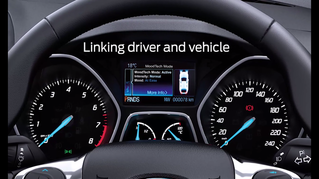
Ford Australia has announced new wearable technology connecting drivers to their car like never before. Based on ‘Mood-Ion Technology’, it would monitor a wearer’s body temperature and use cameras to track eye movement and feed this information into the vehicle. It is hard to foresee what exactlty the vehicle will do in response to driver's mood changes except powering lighting, but In selected Ford vehicles, there will be options to have the glove box retrofitted with a convection oven.

Lexus connects drivers and their cars too, using velcro adhesives to bond drivers to their V-LCRO seats.

​And so does the new LeisureVans app offering to experience the power of driving in a fully autonomous RV. Using the latest advancements in software and ultrasonic hardware, their engineers have perfected the future of the self-driving vehicle. Just download an app from the App store and let it control your self-driving leisure travel van. While driving, the app will suggest you to get some coffee or have a snooze, if you look too tired. It will also make the car to wash itself when needed.

And if you don't even want to think about cars while enjoying a drive, use Ola rooms, converting cabs into mini-hotels coming to your door step. The room will drive by the views you like and restaurants you prefer. Although you could use Deliveroo’s telepathic food order to make it easier. And pre-lick food photos to make sure you like what you are ordering. Or order Google Express parachutes if you want to have your lunch right away.  

VIRTUAL REALITY

Picture
​Google introduced Plastic Cardboard VR Headset proving that "the future is clear." "Google Cardboard Plastic combines everything you love about virtual reality headsets with everything you love about reality," the company said in a statement.
The goal is to make virtual reality feel more compelling, more immersed, make it feel like actual reality.

The innovative gadget allows users to view the world in 4 dimensions with 20/20 resolution and 360 degrees of sound  - assuming that's what is provided by your own senses. But if you prefer to trust other people's senses - try "Snoopavision," a 360-degree viewing experience with rapper Snoop Dogg. After all, "Dre has Beats, Jay has Tidal, Kanye has himself and now the world has Snoopavision," as says promotional video.

And if Virtual Reality still doesn’t seem real enough, ThinkGeek offers VR rig that could spray you with water, shoot stuff at you with a built-in projectile launcher, emit scent, and ticket you with cat arms if you so desire. 

SMART HOME

Picture
Wi-fi-enabled pillow Duolingo is making education more convenient by offering to  teach a language overnight. Thanks to synthetic fibers encouraging development in the cerebral cortex, high frequency sound system and a proprietary algorithm using Morse code to subtly teach the brain new language vocabulary and concepts in one's sleep.

There were more smart home announcements gimmicky enough to pass off as April fools jokes, but we won't be talking about them here. 

WEARABLES

Picture
If you're struggling to keep up with your New Year's resolutions, consider JOLT - new Electrotherapy Fitness Shoes from Soft Star Shoes. High voltage sensors in the JOLT's footbed deliver an electric shock whenever you stop moving, while patented Lace-Lock™ technology makes the shoes impossible to remove - taking fitness motivation aids to "stunning" new heights. 

Picture
We have certainly come a long way since the previous generation of wearables like Gluuv inspired by a Robocop movie (announced on April 1 2014 by HTC). The wearable could double as a self-defense device you’ll definitely want to have around if you ever find yourself in a Blade Runner-reminiscent dĂ©cor.

Slightly less bulky Gloves announced by Samsung and Toshiba could use 25 appropriate fingergestures, replacing laptops, tablets, smartphones, fitness trackers, watches, glasses and any other future mobile innovation.

Perhaps we should come back to this later. 

Happy April Fool's Day!


References (in addition to those provided above)

Smith, Julian. "Apps for apes: Orang-utans want iPads for Christmas." New Scientist 212.2844 (2011): 69-71.

(2000). April Fool's Day and the Medicinal Value of Humor. The virtual mentor : VM, 2 (4) PMID: 23270623

Friedman, Joseph H. "APRIL FOOL'S COMMENTARY: IN PRAISE OF PLACEBOS." Medicine and Health Rhode Island 89.4 (2006): 124.

Redberg, R. (2015). The Prescription Is Laughter JAMA Internal Medicine, 175 (5) DOI: 10.1001/jamainternmed.2014.574

Robertson R (1984). Science and technology - dreams and reality. Journal of dental research, 63 (3), 371-3 PMID: 6583238

Saturday, November 21, 2015

Where Are All the Wearables We Want to Wear?

ORIGINALLY POSTED by AURAMETRIX, introductory post on Linkedin
Millions of years ago our ancestors straightened up and started carrying tools around, instead of dropping them after use. And so technology became a part of daily routine.
As time passed, more useful tools were made than it was feasible to carry or wear over the shoulder. One solution to this problem was monetary exchange, the other was a better technology. Wearables promised to add more convenience than carryables and, ever since humans started to wear clothes some 170,000 years ago, there was no lack of attempts to turn useful products into wearables. But this was not easy.

Eyeglasses correcting vision appeared 700 years ago and moved into mass production phase as more books were printed and read. Yet, first wearers of glasses, monks and scholars, were stigmatized as weak and old until the early 1900s when the 29th US president Theodore Roosevelt and the king of comedy Harold Lloyd finally made glasses popular.  Eyeglasses kept evolving but their primary function remained vision correction and eye protection. Google glass was an amazing technological accomplishment but we were not ready to put computers on our faces.

The first wearable HDTVs from Sony were inconvenient because of the bulky battery pack, and the surrounding waves seemed to reverberate  through your skull. Even so, smart glasses are already developing loyal following  in niche markets such as Augmented/Virtual Reality  gaming and tools for persons with physical disabilities. Google glass is heading toward a second version, and so are second generation wearable TVs like recently launched Royole-X that combines high-resolution display with noise-cancelling headphones. Virtual reality is back with some incredible headsets in development, and the best is yet to come.

The first truly wearable watches were created 200 years ago, some 300 years after portable spring driven clocks. The first smartwatch appeared in 1977. Hewlett Packard’s HP-01 combined a personal calculator, an alarm clock, a stopwatch, a timer, and a 200 year calendar.  Linux-based WatchPad developed by IBM  and Citizen in 2001 featured a graphic display, Bluetooth and an accelerometer and were called a “popular publicity gimmick”. Smartwatches developed in the last decade run on processors and internal components designed for smartphones. As new electronic components are being created, watch designs are getting slimmer,  more attractive and more functional.  Smartwatches might have a chance.

Hearing aids introduced over 100 years ago, are examples of still existing and successful wearable technology. They evolved from cartoonish ear trumpets to digital hearing devices that do more than amplify sound. Many technical problems – such as background noise still remain, but developers are already working on merging more features – like health tracking capabilities or the ability to flip through songs with just the tilt of a head – to create the new wave of hearables.Picture

Google Engineers Invent New Body Part To Strap Gadgets Onto. This was a satirical headline from Onion, but the truth is inventors have already tried every part of the human body as a surface for wearables.

Wearable storage evolved from clunky wooden trunks to small purses hung on one's belt (like Robin Hood's pouch) to ​pockets as we know them, sewn into trousers and dresses, in the late 1700s. Pockets went out of fashion  in the 1790s, and women began to use handbags. They came back larger and plainer during the 19th century. Today's  attempts at wearable storage vary from handbags with built-in-batteries to charge your favorite gizmos on the go, to microchips in clothes or implantable chips storing personal information for mobile payments, to wearable robots aka exoskeletons for lifting and carrying heavy loads. 

But however strange some of the wearables may seem, they are the future and this future is ripe for growth.  


REFERENCES

Toups MA, Kitchen A, Light JE, & Reed DL (2011). Origin of clothing lice indicates early clothing use by anatomically modern humans in Africa. Molecular biology and evolution, 28 (1), 29-32 PMID: 20823373

Bouzouggar A, Barton N, Vanhaeren M, d'Errico F, Collcutt S, Higham T, Hodge E, Parfitt S, Rhodes E, Schwenninger JL, Stringer C, Turner E, Ward S, Moutmir A, & Stambouli A (2007). 82,000-year-old shell beads from North Africa and implications for the origins of modern human behavior. Proceedings of the National Academy of Sciences of the United States of America, 104 (24), 9964-9 PMID: 17548808

Mombers C, Legako K, & Gilchrist A (2015). Identifying medical wearables and sensor technologies that deliver data on clinical endpoints. British journal of clinical pharmacology PMID: 26542184

Sungmee Park, & Jayaraman S (2014). A transdisciplinary approach to wearables, big data and quality of life. Conference proceedings : ... Annual International Conference of the IEEE Engineering in Medicine and Biology Society. IEEE Engineering in Medicine and Biology Society. Annual Conference, 2014, 4155-8 PMID: 25570907

Saturday, September 6, 2014

Is the Internet of Things the Real Thing?

The Internet of Things: an exciting new world with a digital nervous system or a nightmare where objects take decisions while we are unconscious?

15 years ago, when the term was first coined, it was about assigning everything around us a unique identity with RFID tags, to enable all material things to talk to each other and save us time for gathering and using information. As RFID tags dropped below 1 cent cost, and sensors, modems and devices are getting smaller, smarter and cheaper, this vision is moving closer to reality.

The latest Gartner's Hype Cycle (August 2014) places the Internet of Things at the peak of Inflated Expectations, while Big Data evolving in tandem with IoT has already started to fall into the through of disillusionment, getting ready to join mobile health and cloud computing right there on the bottom of the through.


Consumers are not ready to embrace the flood of smart wearables and appliances - as they don't really know what to do with them, don't perceive their value and are concerned about privacy and prices.

Clay Christensen's theory of "disruptive technology" emphasizes that technologies tend to get better at a faster rate than users' needs increase. Next Big Thing often starts as an expensive "toy". When the telephone was first introduced it could only be afforded by the rich and it could only carry a signal over a short distance. If Watson really had said in 1943 that "there is a world market for maybe five computers", as Gordon Bell pointed out much later, it would have held true for some ten years.

The first generation of IoT devices fell short of user needs and was rather primitive. Over a third of people who bought a smart wearable abandoned it a few months later. Yet, the "new" has never been hotter. It seems a new wearable is launching every week and we are constantly waiting for something newer and better, hoping it will finally answer the question "what can we do now that we could not do before?"

However, the current generation of "smart things" is focused mostly on better designed hardware and higher-end consumers. Fashionable elegant-looking devices are supposed to make wearables more appealing and "design thinking" is one of today's hottest buzzwords. Withings ActivitĂ©, Fitbit pendants from Tory Burch,  Yves BĂ©har's designed Vessyl, Diane Von Furstenberg's Google glass, Rebecca Minkoff's tech-enabled jewelry, and the new bracelet from Intel - MICA  - highlighted by pearls and other precious stones - are getting ready to conquer attention of consumers and developers. Especially developers - as the size of the market will depend on the number of developer-entrepreneurs creating value in it.

The app economy taught hardware manufacturers that when people experiment they find ways to create value, often in unexpected ways.  But it also taught developers that they need to invest considerable time to build a marketable app and the chances of that app to make money are about 1 in 25,000. As the average age of developers keeps decreasing getting into the middle and high school years, the main benefit of app development becomes education and learning by itself. But will this be sufficient for the Internet of Things or will inter-networked things remain a toy for the wealthy?


Thursday, March 11, 2010

Bay Area Startups Looking for Cofounders: March 2010

Starting a company can be a difficult experience. Working alone is hard and a lot less fun than working with co-founders. And even though two is said to be the right number, some data point to an increase in success rates with up to 4-5 co-founders. Co-founders wanted March meetup (organized by Alain Raynaud and Thad) featured startups dedicated to improving many aspects of our lives - from education to work productivity, transportation, energy and health.

Kromink
Srini Reddy is developing online service for high school students. His startup is looking for a web application developer, senior architect, and senior product manager to join the founding team.

Seeyu
David Pollak is working on the next generation youtube and looking for the 4th co-founder, a web application developer

FiestasMariachi
The audience gave their hearts out in applause for Beto Juarez' performance of Mariachi La Bamba. His vision is a Mariachi website similar to Lawyers.com (see also Alain's post-presentation interview notes and the technical co-founder description). Beto can be reached as BetoIII at gmail and twitter.

Apptizr
Dave is working on
the application helping to discover iPhone apps. Looking for one more tech cofoudner to extend bootstrapping time. He can be reached as dli at apptizr. Twitter: @apptizr

Roxolar
Yaya's
@roxolar is generating leads for solar energy, the model is similar to lendingtree

Stremfocus
Fred Gibson is looking for a business/marketing cofounder and a coder (Java, Lisp) - the startup is focusing on streamlining workflows based on Steve Blank's Customer Development process. Twitter: @gibsonf1

Gesturelife
Navneet Dalal – with background in machine vision and learning, has an idea on gesture detection using cameras

Life360
Doug gave a brief presentation about this company supported by investments from google and facebook - they won Android Developer Challenge for building one of the top 10 mobile apps and yet are looking for more co-founders.

Crosspath
Ivan presented this early-stage bootstrap making carpooling more accessible form of transportation. Looking for a technical co-founder with 8-10 yrs of experience with web apps


StartupSquare
Tristan Kromer presented MarketResearch Wiki, alternative to Gartner ways to deliver market research and technology insights. The startup needs one more developer/lean co-founder (in addition to 4 technical co-founders). Twitter: @startupSquare

RiseTribe
Matt Howes tries to eat healthier and wants others to do the same. His startup - incorporated in September 2009 - allows members to set goals and track their progress, tapping into the $11 billion self-health market. It integrates with Facebook and Twitter (@risetribe)

Aurametrix
"What if you could have powerful solutions at your fingertips that help you manage your health the way personal finance software manages your money?" asked Irene Gabashvili, who presented her vision for health management systems, including a product in development that focuses on relief for those suffering from digestive problems. Twitter: @Aurametrix

For more startups see:
January minutes
November minutes

Reblog this post [with Zemanta]

Tuesday, March 2, 2010

Organizing the World's information

"My guess is (it will be) about 300 years until computers are as good as, say, your local reference library in doing search,"says Google's first employee and director of technology Craig Silverstein. "But we can make slow and steady progress, and maybe one day we'll get there." (Inside the Wide World of Google CBS News, March 28, 2004). According to CEO Eric Schmidt, people care a lot about information and the possibilities of the unfolding revolution in technology are greater than many of them even realize: “Imagine the scale of the kinds of questions you could ask that you could not ask before.”

The figure is a great compilation of key Google Facts by PingDom. Among the key technical facts not shown here are far-reaching inventions such as Programmable Search Engine (PSE, see patent application) based on the BigTable database (See Research Publication about it in PDF format) and other systems that could help it become more semantic.

The distributed storage system for managing structured data called Bigtable resembles a database sharing implementation strategies with parallel and main-memory databases. Instead of a full relational data model it uses a simple data model with data indexed using row and column names that can be arbitrary strings. A Bigtable is a sparse, distributed, persistent multidimensional sorted map. The map is indexed by a row key, column key, and a timestamp; each value in the map is an uninterpreted array of bytes, although clients often serialize various forms of structured and semi-structured data into these strings, controlling it through careful choices in their schemas.

PSE and other integration technologies may be providing a higher level of semantic analysis.
These techniques could figure out the meaning of content and “fill in the blanks” when an item of information is ambiguous or missing. The idea is to enrich an information object with additional tags so that queries about lineage (where something came from) and likelihood of accuracy (the “correctness” of an information element) can be used to generate a result.

Another new concept is a probabilistic mediated schema automatically created from the data sources. Semantic mappings between the schemas of the data sources are mediated by schemas with probabilities attached to each - to model uncertainty at its core. A deterministic mediated schema created from the probabilistic ones will be exposed to the user who could use the terminology of this mediated schema to interact with the system.

The Semantic Web is emerging to help us get the most out of the world's information. Many interesting applications are already here. Some of them already acquired by major search players - Bing, for example, is based on semantic technology from Powerset that Microsoft purchased in 2008. This blog article is only about one of the players organizing the world's information. Stay tuned for more.


Reblog this post [with Zemanta]

Wednesday, November 4, 2009

Thoughts on the Future of Dx


Workflow, procedures and organization of diagnostic laboratories have changed little since the end of the 19th century. Technology improved quality and safety, lead to higher throughput and allowed private electronic access to patients' lab test results - at least partially, but other than that not much has changed.

The introduction of first generation transcriptome technologies in the mid 1990s (Schena et al., 1995; DeRisi et al., 1996) has led to a phenomenal ability to simultaneously measure thousands of genes, create molecular profiles of cancers, all other diseases and conditions.

Proteomics - coined a couple of years later (James, 1997) - was accepted as an even more promising technique for effective diagnostics of diseases. Figure on the left, however, demonstrates that it too faces many challenges from discovery of biomarkers to their verification and approval. After more than a decade (Oliver et al., 1998), metabolomics has been accepted as - at least - an equally promising technique, but it still lagging behin genomics and proteomics.

All these techniques will have significant impact on the business model of diagnostics. Multiplexing (measuring multiple biomarkers at once) is obviously much more cost-effective. Diagnostics industry is historically very resistant to disruptive technological change, but potential cost advantages should outweigh this, leading to novel business models in health management.

A change will also come from the growing near patient testing (NPT) sector. NPT is already finding a role in wellness monitoring. Existing self tests - such as cholesterol kits - may not be very accurate, but with the advent of inexpensive multiplexing assays this will be overcome. Even when blood testing is done by trained professionals in a lab, there can be significant variability in test results. Same applies to blood pressure measurements - you may need to do three measurements per day for five days in order to get a decent baseline. This only justifies the need to have inexpensive tests that can be done more often.

But lets go back to metabolomics and its potential to provide noninvasive inexpensive diagnostics. Are there any clinical trials attempting to translate it into clinical practice?
Here are our favorite ones:

CANCER
NCT00757952: Diagnosing ovarian cancer in exhaled breath. (Pine Street Foundation & University of Maine)
NCT00898209: Diagnosing Lung cancer in exhaled breath. (Vanderbilt-Ingram Cancer Center)
NCT00898209: Exhaled breath analyzed for lung cancer. (Vanderbilt-Ingram Cancer Center)
NCT00639067: Breath test for early detection of lung cancer (Menssana Research)
NCT00873366: Breath tests to access effectiveness of breast cancer treatment (Mayo Clinic and National Cancer Institute (NCI))

OTHER
NCT00330603: Metabolomic breath analysis to predict treatment for chronic cough (University of Virginia)
NCT00632307: Breath analysis to diagnose COPD; lung cancer; airway infection; interstitial lung disease, sleep apnea; pulmonary disorders with pleural infusions; sarcoidosis (Lung Clinic Hemer, Germany)
NCT00294489: Breath analysis to diagnose Hepatitis C (Hadassah Medical Organization, Jerusalem, Israel)


References
Schena M, Shalon D, Davis RW, Brown PO 1995 Quantitative monitoring of gene expression patterns with complementary DNA microarray. Science 270 : 467 –470[Abstract/Free Full Text]

DeRisi J, Penland L, Brown PO, Bittner ML, Meltzer PS, Ray M, Chen Y, Su YA
1996 Use of a cDNA microarray to analyze gene expression patterns in human cancer. Nat Genet 14 : 457 –460[CrossRef][Medline]

James P 1997 Protein identification in the post-genome era: the rapid rise of proteomics.". Quarterly reviews of biophysics 30 (4): 279–331. doi:10.1017/S0033583597003399. PMID 9634650.

Oliver SG, Winson MK, Kell DB, Baganz F. 1998. Systematic functional analysis of the yeast genome. Trends in Biotechnology 16: 373-378.

Aurametrix is conducting research to develop next-generation diagnostics to help you evaluate your personal health risks and benefits. Better tools for a healthier world.
Reblog this post [with Zemanta]

Wednesday, October 28, 2009

Meabolomics.. coming of age?

According to Oliver et al. 1998 and Tweeddale et al. 1998, metabolomics is the
study of all of an organism’s low-molecular-weight molecules or metabolites. It is also defined (although sometimes under a slightly different name of metabonomics)as ‘the quantitative measurement of the dynamic multiparametric metabolic response of living systems to pathophysiological stimuli or genetic modification’(Nicholson et al. 1999, 2002).

After more than a decade (Oliver et al., 1998), metabolomics has begun to acquire some credence in the scientific community and is finally coming of age, although its acceptance cannot be compared with that of its forerunners,

Metabolic network showing the links between en...Image via Wikipedia


genomics and proteomics.

The legitimization of metabolomics as a valid scientific entity depends on the size of the research community it influences (Arita, 2009). By far the most effective medium for inoculation is the web infrastructure: public servers that accommodate experimental data, simple formats and guidelines for their interpretation, and connectivity between data and tools for analysis. When these elements satisfy the condition to initiate a social epidemic, metabolomics will be accepted as a fundamental data-driven science that can unite hitherto independently conducted research disciplines.

At present, both technologies are applied not only to traditional biology but also to metagenomics and environmental sciences, such as the monitoring of microbial dynamics in different environments [Fan at el., 2009; Wikoff et al. 2009].

Still, enthusiasm for metabolomics continues to be lukewarm. Although the name ‘metabolomics’ suggests comprehensive detection, the number of identifiable metabolites is currently limited even if multiple measurement technologies are combined [Fernie, 2007]

The trade-off between coverage(physicochemical variations of metabolites that can be detected by the same method) and/or sensitivity (the lowest detectable metabolite concentration), and precision (accuracy of detected masses or signals) is a severe hurdle this emerging technology has yet to overcome, and the identifiable number of metabolites has not increased
much

In their seminal paper, Fiehn et al. used gas chromatography/ mass spectrometry (GC/MS) and reported the peak assignment of 164 metabolites (101 polar and 63 lipophilic)
in Arabidopsis thaliana [Fiehn et al, 2007]. After nearly a decade, using the same analytical platform, the number of metabolites identifiable at top research institutes was even
lower; this may be attributable to higher measurement accuracy [14,15]. In 2003, Soga et al. reported the detection of 1692 ionic metabolite peaks from Bacillus subtilis by capillary electrophoresis/mass spectrometry (CE/MS) [16].

Another important factor is the intelligibility of data. In biology, the readability of raw data affects popularity. In fact, metabolism, the primary research topic in metabolomics, is notorious for its incomprehensibility and many researchers stayed away from metabolic networks containing lengthy structural and stoichiometric information. The KEGG database gained popularity for its oversimplified representation of metabolic networks: each metabolite is represented as a node without structure, and each reaction as a binary relationship without stoichiometry [34].

In metabolomics we confront many ambiguous data such as metabolite IDs and mass spectral tags (MSTs), that is, repeatedly detected but unidentified mass signals that account for more than half of the detected spectral peaks [50].

Metabolon has recently got 6 millions in serises C financing
Metabolon offers global biochemical profiling (metabolomic) services to researchers working in drug safety and toxicology, bioprocess optimization, consumer products and other areas which benefit from insight into complex biochemical processes and how they change in response to experimental variables.

The company’s technology has been used to identify biochemical biomarkers useful for the development of a wide range of diagnostics. These markers are being applied to the development of its own proprietary diagnostic tools for prostate cancer and insulin resistance.

http://www.metabolon.com/news/index.php
METABOLON CLOSES ADDITIONAL FINANCING
Series C Round Now Closed with a Total of $12.3 Million in Additional Capital


Ellis DI, Dunn WB, Griffin JL, Allwood JW, Goodacre R: Metabolic
fingerprinting as a diagnostic tool. Pharmacogenomics 2007,
8:1243-1266.

Walsh MC, Nugent A, Brennan L, Gibney MJ: Understanding the
metabolome — challenges for metabolomics. Nutr Bull 2009,
33:316-323.

Scalbert A, Brennan L, Fiehn O, Hankemeier T, Kristal BS, van
Ommen B, Pujos-Guillot E, Verheij E, Wishart D, Wopereis S:
Mass-spectrometry-based metabolomics: limitations and
recommendations for future progress with particular focus on
nutrition research. Metabolomics 2009. (Epub ahead of print).
Presented by eminent scientists in metabolomics research, this review
spans topics from the technological foundation of metabolomics to its
future challenges. It is highly recommended as an overview of the
research trend.


14. Kusano M, Fukushima A, Arita M, Jonsson P, Moritz T,
Kobayashi M, Hayashi N, Tohge T, Saito K: Unbiased
characterization of genotype-dependent metabolic
regulations by metabolomic approach in Arabidopsis thaliana.
BMC Syst Biol 2007, 1:53.
15. Lytovchenko A, Beleggia R, Schauer N, Isaacson T, Leuendorf JE,
Hellmann H, Rose JK, Fernie AR: Application of GC–MS for the
detection of lipophilic compounds in diverse plant tissues.
Plant Methods 2009, 5:4
16. Soga T, Ohashi Y, Ueno Y, Naraoka H, Tomita M, Nishioka T:
Quantitative metabolome analysis using capillary
electrophoresis mass spectrometry. J Proteome Res 2003,
2:488-494.
17. van der Werf MJ, Overkamp KM, Muilwijk B, Coulier L,
Hankemeier T: Microbial metabolomics: toward a platform
with full metabolome coverage
. Anal Biochem 2007,
370:17-25.
TNO Quality of Life, 3700 AJ Zeist, The Netherlands. mariet.vanderwerf@tno.nl

18. Gladwell M: The Tipping Point: How Little Things Can Make a Big
DifferenceLittle, Brown and Company; 2000.
19. Liolios K, Mavromatis K, Tavernarakis N, Kyrpides NC: The
Genomes On Line Database (GOLD) in 2007: status of genomic
and metagenomic projects and their asso

34. Okuda S, Yamada T, Hamajima M, Itoh M, Katayama T, Bork P,
Goto S, Kanehisa M: KEGG Atlas mapping for global
analysis of metabolic pathways. Nucleic Acids Res 2008,
36:W423-426.
35. Arita M: The metabolic world of Escherichia coli is not small.
Proc Natl Acad Sci U S A 2004, 101:1543-1547.
50. Kopka J, Schauer N, Krueger S, Birkemeyer C, Usadel B,
Bergmu¨ ller E, Do¨ rmann P, Weckwerth W, Gibon Y, Stitt M et al.:
GMD@CSB.DB: the Golm Metabolome Database.
Bioinformatics 2005, 21:1635-1638.
51. Horai H, Arita M, Nishioka T: Comparison of ESI-MS Spectra in
MassBank Database. In Proceedings of the First International
Conference on BioMedical Engineering and Informatics (BMEI), vol
2; Sanya, China: 2008:853-857.
52. Wishart DS, Knox C, Guo AC, Eisner R, Young N, Gautam B,
Hau DD, Psychogios N, Dong E, Bouatra S et al.: HMDB: a
knowledgebase for the human metabolome. Nucleic Acids Res
2009, 37:D603-610.

53. Kind T, Scholz M, Fiehn O: How large is the metabolome? A
critical analysis of data exchange practices in chemistry. PLoS
One 2009, 4:e5440.


Arita M. What can metabolomics learn from genomics and proteomics? Curr Opin Biotechnol. 2009 Dec;20(6):610-5. Epub 2009 Oct 21.
Metabolomics review (see pubmed abstract and the full article in pdf format)

Fan WMT, Bird JA, Brodie EL, Lane AN: 13C-isotopomer-based
metabolomics of microbial groups isolated from two forest
soils. Metabolomics 2009, 5:108-122.

Fernie AR: The future of metabolic phytochemistry: larger
numbers of metabolites, higher resolution, greater
understanding. Phytochemistry 2007, 68:2861-2880.

Fiehn O, Kopka J, Do¨ rmann P, Altmann T, Trethewey RN,
Willmitzer L: Metabolite profiling for plant functional genomics.
Nat Biotechnol 2000, 18:1157-1161.

Nicholson JK, Lindon JC, Holmes E (1999) ‘Metabonomics’:
understanding the metabolic responses of living systems to
pathophysiological stimuli via multivariate statistical
analysis of biological NMR spectroscopic data. Xenobiotica 29: 1181–1189

Nicholson JK, Connelly J, Lindon JC, Holmes E (2002) Metabonomics: a platform for studying drug toxicity and gene function. Nat Rev Drug Discov 1: 153–161

Oliver SG, Winson MK, Kell DB, Baganz F. 1998. Systematic functional analysis of the yeast genome. Trends in Biotechnology 16: 373-378.

Tweeddale H, Notley-McRobb L, Ferenci T (1998) Effect of slow growth on metabolism of Escherichia coli, as revealed by global metabolite pool (‘‘metabolome’’) analysis.
J Bacteriol 180: 5109–5116


Wikoff WR, Anfora AT, Liu J, Schultz PG, Lesley SA, Peters EC,
Siuzdak G: Metabolomics analysis reveals large effects of gut
microflora on mammalian blood metabolites. Proc Natl Acad
Sci U S A 2009, 106:3698-3703.

Reblog this post [with Zemanta]


blockquote { margin:1em 20px; background: #dfdfdf; padding: 8px 8px 8px 8px; font-style: italic; }