Showing posts with label future. Show all posts

Tuesday, August 12, 2025

Is the Future of Medicine Just a Prompt Away?

In Evaluating General-Purpose LLMs for Patient-Facing Use: Dermatology-Centered Systematic Review and Meta-Analysis (medRxiv, 2025), the data tells a fascinating story: large language models (LLMs) are improving in medical reasoning, empathy, and safety - but they’re not perfect, and trust takes time to earn. Which, come to think of it, sounds a lot like the long human history of hoping for miracle healers.

Long before stethoscopes, scalpels, and sterile gloves, our first “doctors” were magicians - or at least, that’s what everyone believed. Prehistoric healers waved bones, mumbled incantations, and applied sometimes questionable herbal pastes. Yet enough patients recovered to keep the legend alive.

Fast forward a few millennia and not much has changed… except the props. The bone rattle has been replaced by a diagnostic app. The “spirit-cleansing smoke” is now an MRI scan. And our new shamans? They’re called AI engineers.

Just like in the old days, we still crave the miracle cure, the instant fix, the all-knowing healer. Our dream is a tireless personal doctor who remembers every ache, every allergy, every bit of medical literature (plus the plot of every episode of Grey’s Anatomy).

When ChatGPT burst into the public spotlight in late 2022, some were fascinated and some were wary. Could a chatbot really diagnose a rash? Suggest a safe treatment? Explain it all in plain language?

Early studies, including those reviewed in the paper, painted a mixed picture. In 2022, the mood was skeptical. By 2023, optimism surged as newer models like GPT-4, Claude, and Gemini started showing measurable gains in accuracy, empathy, and communication. But by 2025, the mood had shifted again - not to cynicism, but toward a more critical view.

The truth is, AI in medicine is a lot like the magic of old: it works impressively well in certain contexts, but not always when or how you expect. LLMs are now better at interpreting images, offering solid medication safety advice, and even admitting when they don’t know - a kind of digital humility our ancestors probably wished their witch doctors had. But they still have limits. Even when an AI aces a medical board exam and offers great second opinions, patients using it alone don’t necessarily make better decisions.

That’s why the paper calls for evaluator-aware, patient-in-the-loop frameworks - ways of measuring not just whether the AI gets the right answer, but whether it helps real people make better choices. Because in healthcare, as in magic, the spell only works if it actually helps the patient in the real world.


REFERENCE

Irene S. Gabashvili Evaluating General-Purpose LLMs for Patient-Facing Use: Dermatology-Centered Systematic Review and Meta-Analysis medRxiv 2025.08.11.25333149; doi: https://doi.org/10.1101/2025.08.11.25333149

Monday, July 24, 2023

The Past, Present, and Future of AI-Powered Medicine

In this era of rapidly advancing technology, Artificial Intelligence (AI) is spearheading transformative changes, particularly within the healthcare sector. A prime example is ChatGPT, a game-changer that is fast becoming an influential player in the biomedical field. Its potential to catalyze innovation and revolutionize medical research is profound. 

A MedrXiv paper posted today is a systematic review of AI in biomedical literature. The scope of this review is broad, encompassing preprints, peer-reviewed articles, case reports, patents, clinical trials, and even FDA approvals. The paper talks about impact of AI, including ChatGPT, across all medical specialties and subsets of publications, finding overrepresented domains within each subset, highlighting potential research gaps, biases, or areas of excessive focus. 

The pace at which the biomedical literature is growing is staggering, with two new papers being added every minute, around the clock. The MedrXiv paper also brings to light the limitations of current medical publishing models. 

The human author collaborated with ChatGPT, Bing, Claude, and Bard, and used SciSpace Copilot to review hundreds of systematic reviews and thousands of unique records across various databases. It aimed to comprehensively map out past achievements, current developments, and potential future directions in AI-based medical research. The paper represents the latest brainchild of an open science collaboration project, which welcomes participation from others at https://osf.io/87u6q/

The study reveals that as ChatGPT matures, it's finding applications across diverse medical specialties demanding cross-disciplinary collaboration. A fascinating trend shows a transition from theoretical to clinical applications in the AI literature, mirroring developments within the ChatGPT space.

Despite challenges such as ensuring the quality of training data and managing ethical concerns, ChatGPT is fostering the adoption of AI tools within medical areas that have been historically underrepresented in AI application.

If you have an interest in the future of medicine and the role AI technologies like ChatGPT play in shaping it, check out this project. It offers a compelling glimpse into what the future of healthcare might look like. 


REFERENCES

Gabashvili I.S. Artificial Intelligence in Biomedicine: Systematic Review. medRxiv 2023.07.23.23292672; doi: https://doi.org/10.1101/2023.07.23.23292672

Gabashvili I.S. The impact and applications of ChatGPT: a systematic review of literature reviews. arXiv:2305.18086 [cs.CY] https://doi.org/10.48550/arXiv.2305.18086

Gabashvili IS. ChatGPT in Dermatology: A Comprehensive Systematic Review JMIR Preprints. 02/06/2023:48979. medRxiv 2023.06.11.23291252; https://doi.org/10.1101/2023.06.11.23291252

Tuesday, June 30, 2015

Technologies and Generations

Children no longer obey their parents and the end of the world is evidently approaching. So said a clay tablet inscribed almost 5 thousand years ago. But the world still stands, although we do go through golden and dark ages and societies rise and fall.

Technology's golden age is now, or so we hope. How are current generations influenced by it and how will they shape the future world?

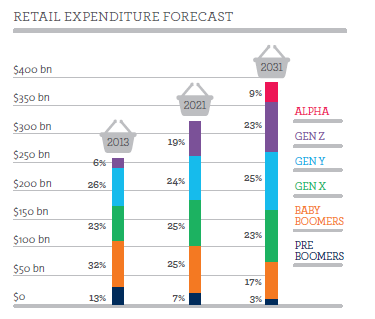
Even as they age, Baby Boomers embrace emerging technologies such as smartphones and social networking. They will be the driving and demanding force behind innovation in healthcare. In the past, they drove the economy by spending and borrowing, boosting housing and stock prices, increasing demand for products and services. 

America's neglected middle child, Generation X is now the quiet driving force behind enterprise, media and information consumption. Xers endured lots of destruction, but were able to adapt and sparked a renaissance of entrepreneurship. They bring to the table a significant amount of buying power, but are less eager to spend money. Nielsen poll suggests they prefer value over social acceptance.

Millennial Generation, alternatively dubbed the Net Generation, Generation Y (or Why?), Echo-boomers, Nexters, and Digital Natives is now the largest generation in U.S history. Fueled by immigration, they outgrew the outsized Baby Boomer population and continue to grow.  Raised on a steady diet of video games, in a world where almost everything can be done with an app, fanned by economic slowdown, they are choosing to live differently and embrace the sharing economySince the second world war, purchases of new cars and suburban houses have propelled economic recoveries. Millennials may have lost interest in both, spending on smartphones instead. "The cheapest generation" burdened by student loans is renting instead of buying. They are demanding better integration of technology into public services, prefer healthy, natural, socially and environmentally conscious products.

Perhaps auto brands and home builders just need to leverage mobile and environmental sustainability to attract this generation? Manufacturers do think so trying to turn cars into "giant docking stations with wheels". Tesla is one example of a brand adapting to millennials - and it's the top automotive stock owned by this generation. 

One-in-four Millennials (23%) already installed at least one of Internet-of-Things products in their homes, compared to 12% of the total population. But building a true "smart home" - like the one owned by the Jetson's  -  integrating and managing multiple devices, and dealing with their eminent malfunctions needs a lot of patience. Perhaps companies like IOTAS - creating smart homes for today's renters  - have taken the right first step? 

In the coming years, Millennials will continue to drive the growth in the Internet of Things, connected cars and wearable markets, and Generation Z will inherit technology rigorously tested by prior generations. What will be their signature product and communication device? We'll know soon enough.

Join our conference "The Rise of the Millennials – Emerging Disruptive Trends". It will take place on November 21st 2015, at the Intel Auditorium in Santa Clara. 


REFERENCES

Putre L (2013). The march of the Millenials. Your hospital staff in 2025: the same, only different. Hospitals & health networks / AHA, 87 (9) PMID: 24260968

G. Vouchilas, C. Ulasewicz,  (2014) The “Not so Young” Millennial Consumer  International Journal of Arts and Commerce Vol. 3 No. 5

Pew Research Group (2010) “Americans and their gadgets” (2010) 

Costanza, D., Badger, J., Fraser, R., Severt, J., & Gade, P. (2012). Generational Differences in Work-Related Attitudes: A Meta-analysis Journal of Business and Psychology, 27 (4), 375-394 DOI: 10.1007/s10869-012-9259-4 

Becton, J., Walker, H., & Jones-Farmer, A. (2014). Generational differences in workplace behavior Journal of Applied Social Psychology, 44 (3), 175-189 DOI: 10.1111/jasp.12208

Aschenbrener CA. (1998) The future is in the present: the impact of generations. J Am Coll Dent. 65(4):23-8. PMID: 9929986

Autotrader (2013) The Next Generation Car Buyer Millennials.

M.Fitzpatrick. (2013) Why I regret making my house a smart home

blockquote { margin:1em 20px; background: #dfdfdf; padding: 8px 8px 8px 8px; font-style: italic; }