
Children no longer obey their parents and the end of the world is evidently approaching. So said a clay tablet inscribed almost 5 thousand years ago. But the world still stands, although we do go through golden and dark ages and societies rise and fall.
Technology's golden age is now, or so we hope. How are current generations influenced by it and how will they shape the future world?


Even as they age, Baby Boomers embrace emerging technologies such as smartphones and social networking. They will be the driving and demanding force behind innovation in healthcare. In the past, they drove the economy by spending and borrowing, boosting housing and stock prices, increasing demand for products and services.
America's neglected middle child, Generation X is now the quiet driving force behind enterprise, media and information consumption. Xers endured lots of destruction, but were able to adapt and sparked a renaissance of entrepreneurship. They bring to the table a significant amount of buying power, but are less eager to spend money. Nielsen poll suggests they prefer value over social acceptance.

Millennial Generation, alternatively dubbed the Net Generation, Generation Y (or Why?), Echo-boomers, Nexters, and Digital Natives is now the largest generation in U.S history. Fueled by immigration, they outgrew the outsized Baby Boomer population and continue to grow. Raised on a steady diet of video games, in a world where almost everything can be done with an app, fanned by economic slowdown, they are choosing to live differently and embrace the sharing economy. Since the second world war, purchases of new cars and suburban houses have propelled economic recoveries. Millennials may have lost interest in both, spending on smartphones instead. "The cheapest generation" burdened by student loans is renting instead of buying. They are demanding better integration of technology into public services, prefer healthy, natural, socially and environmentally conscious products.
Perhaps auto brands and home builders just need to leverage mobile and environmental sustainability to attract this generation? Manufacturers do think so trying to turn cars into "giant docking stations with wheels". Tesla is one example of a brand adapting to millennials - and it's the top automotive stock owned by this generation.

REFERENCES
Costanza, D., Badger, J., Fraser, R., Severt, J., & Gade, P. (2012). Generational Differences in Work-Related Attitudes: A Meta-analysis Journal of Business and Psychology, 27 (4), 375-394 DOI: 10.1007/s10869-012-9259-4
Becton, J., Walker, H., & Jones-Farmer, A. (2014). Generational differences in workplace behavior Journal of Applied Social Psychology, 44 (3), 175-189 DOI: 10.1111/jasp.12208
Aschenbrener CA. (1998) The future is in the present: the impact of generations. J Am Coll Dent. 65(4):23-8. PMID: 9929986
Autotrader (2013) The Next Generation Car Buyer Millennials.
M.Fitzpatrick. (2013) Why I regret making my house a smart home.
Technology's golden age is now, or so we hope. How are current generations influenced by it and how will they shape the future world?


Even as they age, Baby Boomers embrace emerging technologies such as smartphones and social networking. They will be the driving and demanding force behind innovation in healthcare. In the past, they drove the economy by spending and borrowing, boosting housing and stock prices, increasing demand for products and services.
America's neglected middle child, Generation X is now the quiet driving force behind enterprise, media and information consumption. Xers endured lots of destruction, but were able to adapt and sparked a renaissance of entrepreneurship. They bring to the table a significant amount of buying power, but are less eager to spend money. Nielsen poll suggests they prefer value over social acceptance.
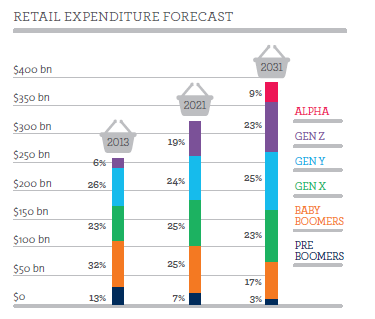
Millennial Generation, alternatively dubbed the Net Generation, Generation Y (or Why?), Echo-boomers, Nexters, and Digital Natives is now the largest generation in U.S history. Fueled by immigration, they outgrew the outsized Baby Boomer population and continue to grow. Raised on a steady diet of video games, in a world where almost everything can be done with an app, fanned by economic slowdown, they are choosing to live differently and embrace the sharing economy. Since the second world war, purchases of new cars and suburban houses have propelled economic recoveries. Millennials may have lost interest in both, spending on smartphones instead. "The cheapest generation" burdened by student loans is renting instead of buying. They are demanding better integration of technology into public services, prefer healthy, natural, socially and environmentally conscious products.
Perhaps auto brands and home builders just need to leverage mobile and environmental sustainability to attract this generation? Manufacturers do think so trying to turn cars into "giant docking stations with wheels". Tesla is one example of a brand adapting to millennials - and it's the top automotive stock owned by this generation.

One-in-four Millennials (23%) already installed at least one of Internet-of-Things products in their homes, compared to 12% of the total population. But building a true "smart home" - like the one owned by the Jetson's - integrating and managing multiple devices, and dealing with their eminent malfunctions needs a lot of patience. Perhaps companies like IOTAS - creating smart homes for today's renters - have taken the right first step?
In the coming years, Millennials will continue to drive the growth in the Internet of Things, connected cars and wearable markets, and Generation Z will inherit technology rigorously tested by prior generations. What will be their signature product and communication device? We'll know soon enough.
Join our conference "The Rise of the Millennials – Emerging Disruptive Trends". It will take place on November 21st 2015, at the Intel Auditorium in Santa Clara.
REFERENCES
Putre L (2013). The march of the Millenials. Your hospital staff in 2025: the same, only different. Hospitals & health networks / AHA, 87 (9) PMID: 24260968
G. Vouchilas, C. Ulasewicz, (2014) The “Not so Young” Millennial Consumer International Journal of Arts and Commerce Vol. 3 No. 5
Costanza, D., Badger, J., Fraser, R., Severt, J., & Gade, P. (2012). Generational Differences in Work-Related Attitudes: A Meta-analysis Journal of Business and Psychology, 27 (4), 375-394 DOI: 10.1007/s10869-012-9259-4
Becton, J., Walker, H., & Jones-Farmer, A. (2014). Generational differences in workplace behavior Journal of Applied Social Psychology, 44 (3), 175-189 DOI: 10.1111/jasp.12208
Aschenbrener CA. (1998) The future is in the present: the impact of generations. J Am Coll Dent. 65(4):23-8. PMID: 9929986
Autotrader (2013) The Next Generation Car Buyer Millennials.
M.Fitzpatrick. (2013) Why I regret making my house a smart home.


![Reblog this post [with Zemanta]](https://lh3.googleusercontent.com/blogger_img_proxy/AEn0k_ssvBgUAkzt-xRHiWX4C0tmjtTZvdCwaBy7fDfZCTViDuSJBCpqnXinW7RgUi1rzjZC3VXQ4i-xj_DmyXVanl5qwLZWr0AlWshNI3bRrd0tAQsBrOyhchqZkW3BJDM-cTuU2m0z3Bt07ftbyWX22-U=s0-d)


![Reblog this post [with Zemanta]](https://lh3.googleusercontent.com/blogger_img_proxy/AEn0k_tjCi-72ivnWbDYlcyDXAOyvw7CcezrZaAWJRp_IZ5r20IDQWEHNoDyWlS11tF4so6qUu548pkyeQ0kYSEhvSHEHGc6cXG9zct6CPNcc4tDRogn4nfOs58YisImmljRBDiawr060TcLn55sYGiwrVU=s0-d)